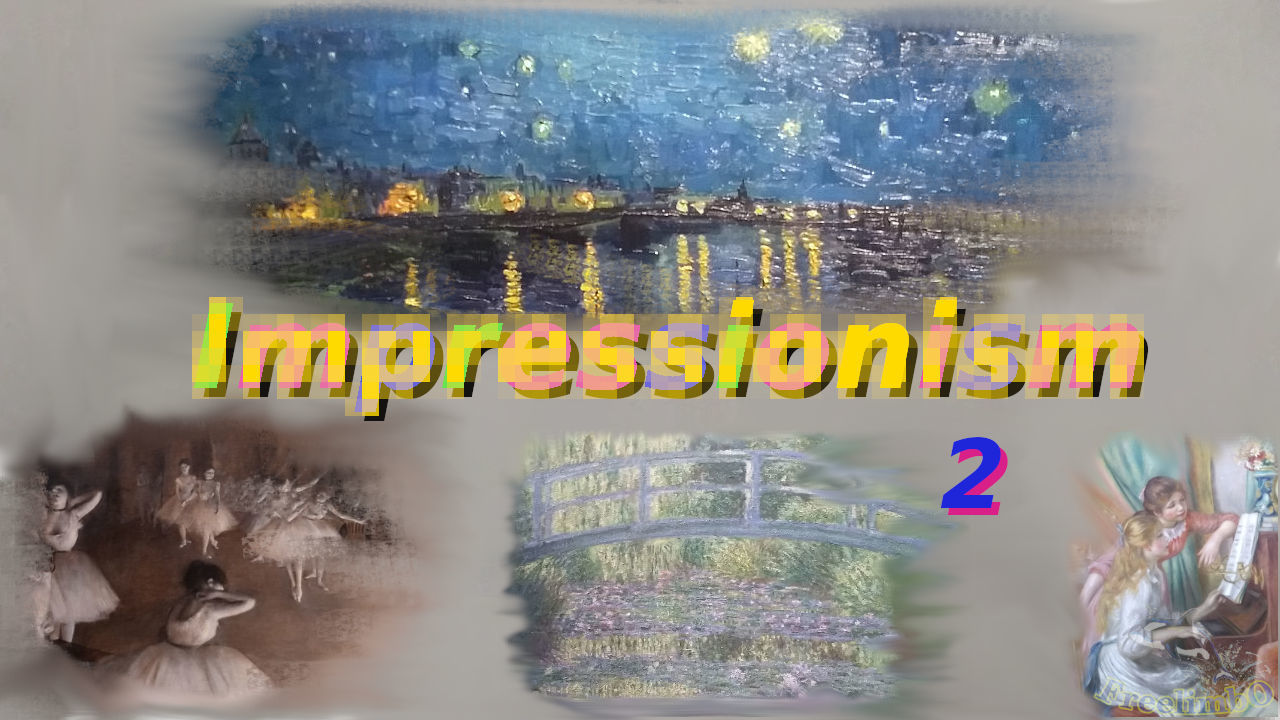
Painters: Renoir, Seurat, and van Gogh.
Let us move on to the other three famous painters, who were also my favorite ones: Renoir, Seurat, and van Gogh. Their painting styles were further evolved and branched out from the classic Impressionism.
Pierre-Auguste Renoir (1841-1919)
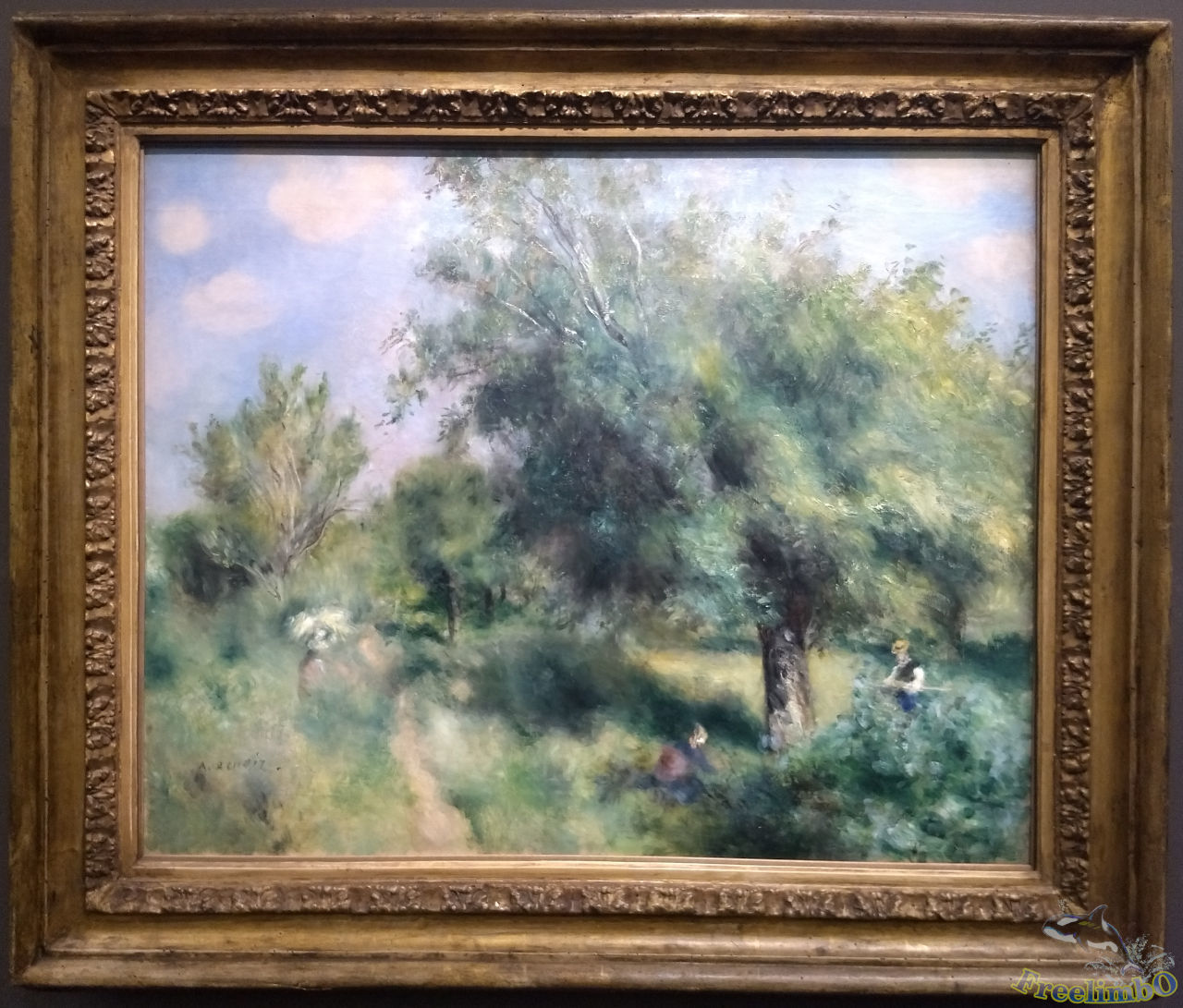
Le Poirier d’Angleterre. 1871
Somebody said that Renior’s landscape paintings were all disasters because people can hardly tell the the outlines of items in them. I would say that if his paintings can delivery strong impressions across generations to you, those paintings were qualified to be good from the perspective of Impressionism. Moreover, the tree trunk and its shadow on the grass helped us understanding the main object in this painting might be the big tree. Based on our experience, if the strong trunk was standing still, but we cannot see the outlines of leaves clearly, there must be some winds blowing through the tree. That’s the spirit! That made this painting somehow more dynamic and audible.
When I saw this painting, which included a trail, some trees, tall grass, shrubs, a few people, and sunny sky with some small clouds, I kind of heard the sound of intermittent winds blowing the leaves and shrubs. Everything was so vividly familiar with my childhood memory. I used to ride my tiny bicycles and chasing with my playmates in the neighborhood along the small paths almost buried in the unattended tall grass. We sometimes stopped yelling and laughing to watch and hear the rustling leaves when strong winds blew through the paths. What a chilling and joyful experience!
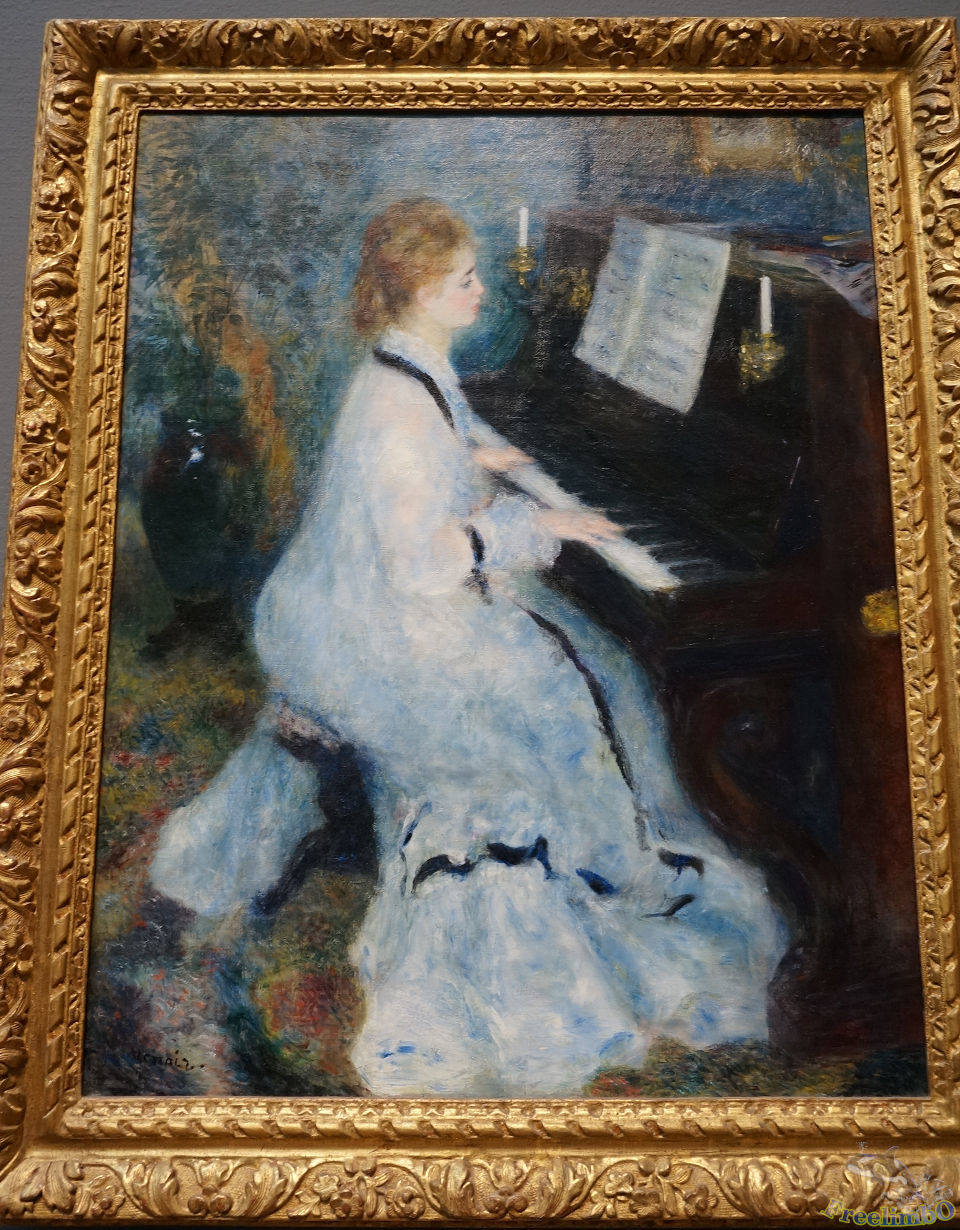
Woman at the Piano. 1875
Girls were the expertise of Renoir. This woman’s pose and gesture showed that she probably stopped playing the piano to read and memorize the notes on the music sheets. I know a few about playing music instruments. Once I determined to learn playing guitar, but someone told me that I should protect my fingers because I am a software programmer. I agreed since I heavily relied on them to make money to support my family. Therefore, I had to abort my unstarted guitar career heartbrokenly. Anyway, I often saw my wife learning a new piece of piano music, and she periodically stopped to watch the music notes like the women in Renior’s painting. That moment of serenity was interrupting and maybe quite abrupt, but it was precisely captured by Renior. To the people around a learning instrument player, we usually got an illusion that the time stopped flowing and then opened our eyes and turn our necks to see why the player stopped.
Same as always, girls or women in Renoir’s paintings all came with the same fairy aura that forbade us seeing their limbs and texture on the dresses clearly, but we always can distinguish where their hands were and what they were doing. Renoir’s talent and sensitivity to filter all unnecessary details out worked amazing great. Contrast to the vague bodies, Renoir was super picky when drawing girl’s faces. With minimum strokes on girls' faces, Renoir determined to depict their emotions, concentration, seriousness, and the words in their minds. Last but not least, Renoir used to put light blushers on girls' cheeks to mesmerize us with an obsession to kiss his girls on the cheeks. Please try your best to refrain the impulse or the museum’s alarm will be triggered.
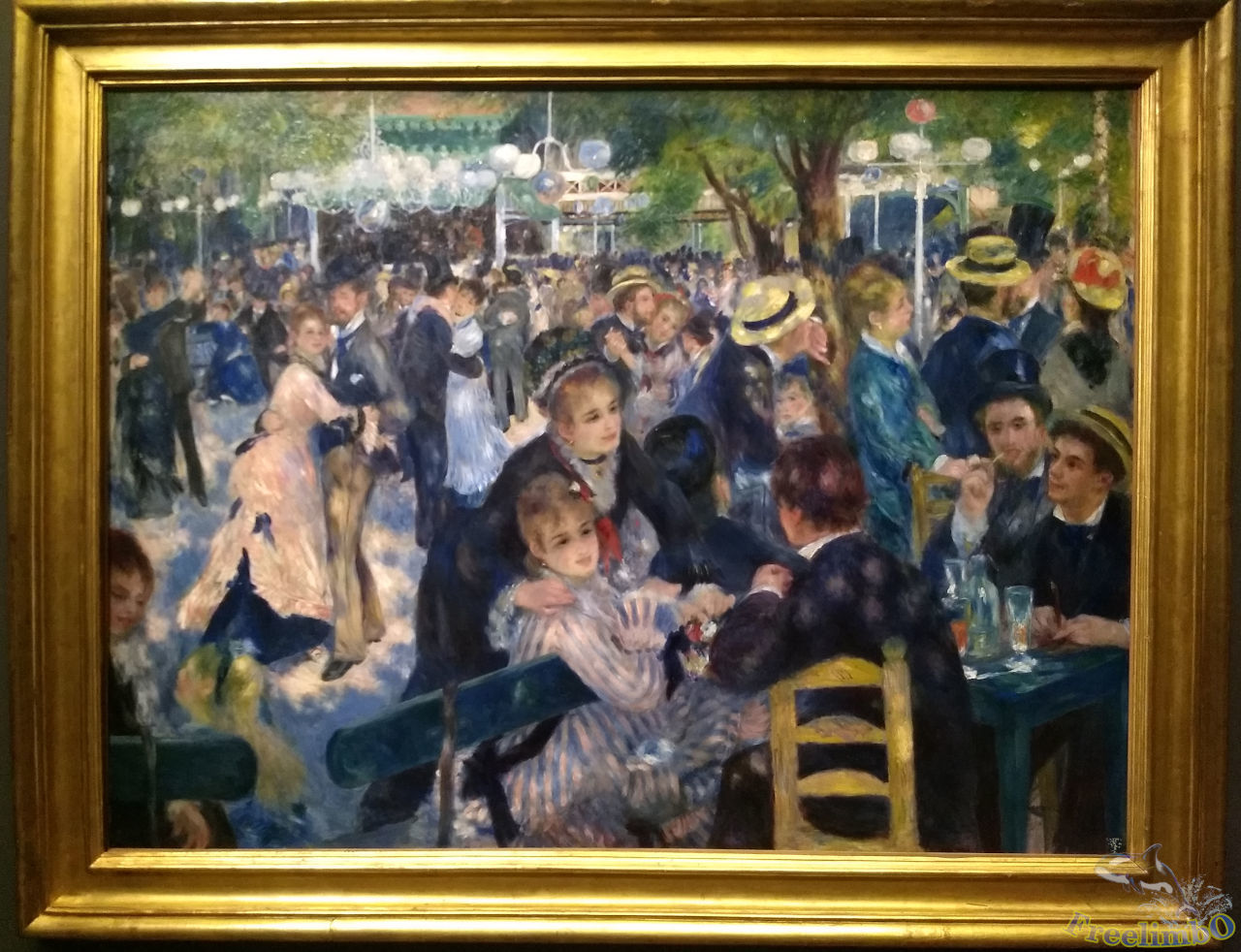
Dance at the Moulin de la Galette. 1876
The decently dressed people on the dancing square looked so happy bathing in the sun shine, moving with the music, and enjoying the wonderful moments with their beloved ones. It might be hard to get aware of the light spots falling on people’s faces, suits, skirts, and hats because they were ubiquitously blended in and scattered everywhere in the painting. The two beautiful ladies turning around from the long bench to face the gentleman sitting on a small table with his friends made us anticipate there was about to have some attracting and romantic story spoke out from the gentleman’s mouth or started between them. Now we could understand why someone said Renoir’s figure paintings were built-in with temperature.
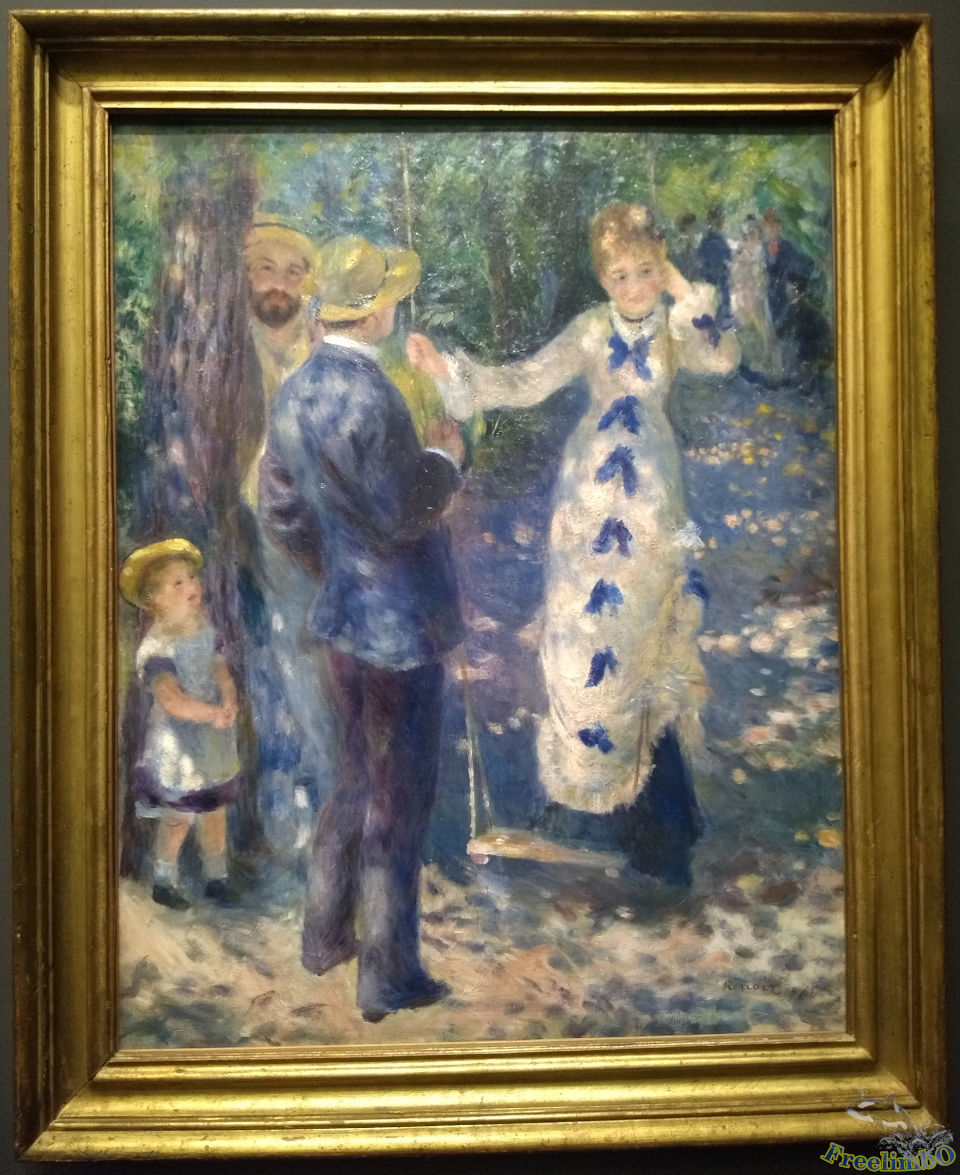
The Swing. 1876
Gentleman: Lady first.
Lady: No, you first.
Gentleman: No, I insist. Lady first.
Lady: Well, I go first. (stepping on the swing.)
Little girl on the left leaning on the tree: (almost crying)… I though that swing was made for kids.
No offence but lmao, LOL. When I saw this painting, the above plot flashed into my head and made me feel it hilarious. If you noticed the anticipating posture of the lovely little girl with yellow hat and the height of the swing seat, you must theorize that the swing was designed to have a weight limit for kids only. This should be a bully scene describing three adults ruthlessly focused on their own happiness while ignoring the poor little girl nearby. Anyway, ubiquitous light spots, fairy-like girls, and unimportant males: one hundred percent of Renoir’s work.
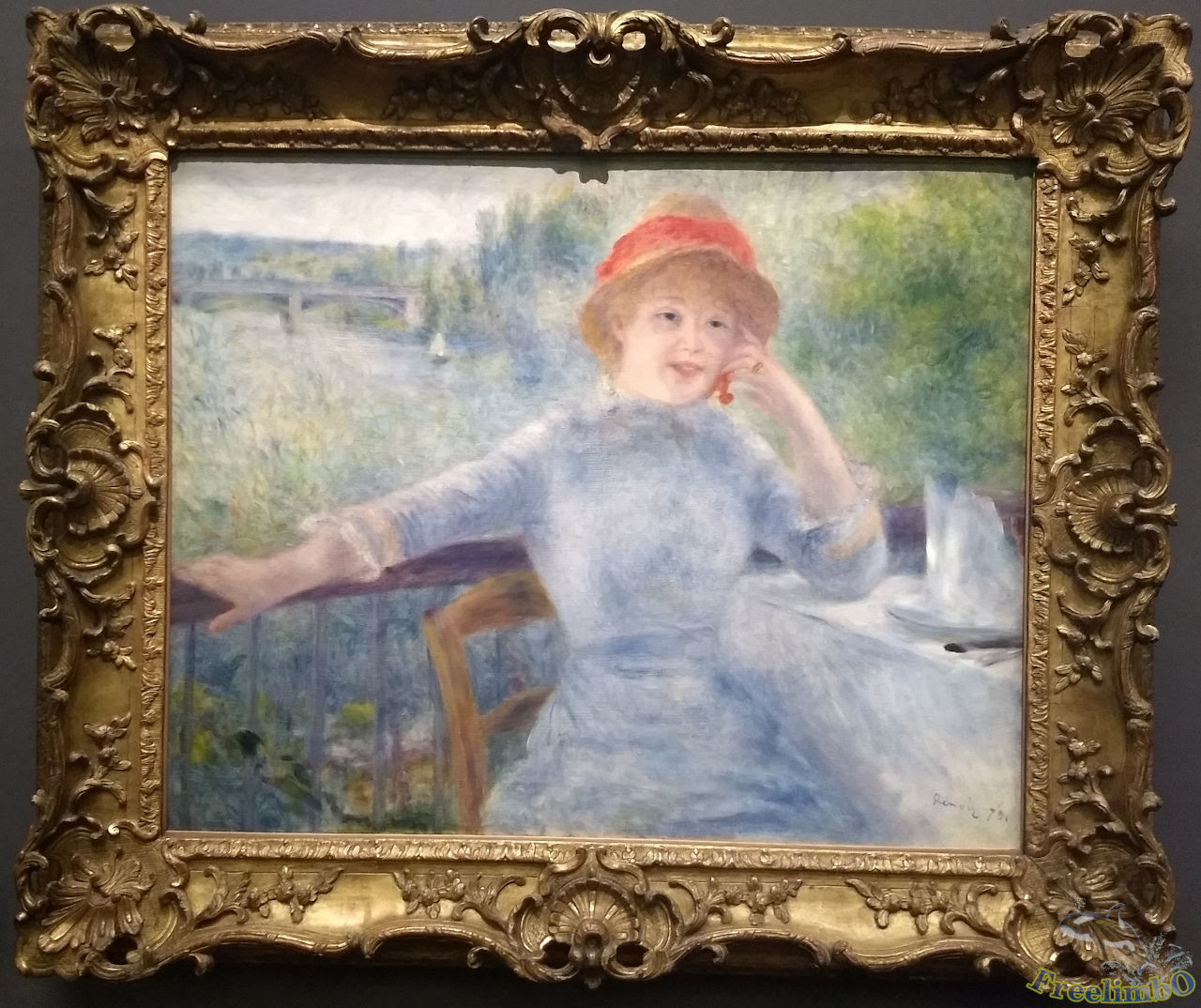
Alphonsine Fournaise. 1879
This was the most suspicious portrait by Renoir. Where were the light spots and blusher tints? I theorized that Renoir might run out of red color so that he can only spare red brushes for the red ribbon on her hat. Otherwise, the process of painting must be very unpleasant for the model or Renoir.
OK, I was kidding. The balcony she was sitting might be bathed in the sunshine without any trees to block the lights so that there were no light spots. We still can see the shadow of her left arm on the table. It was too vague to be seen, but it existed. That should be a hot summer day so that the model rolling her both sleeves and put on a cloche.
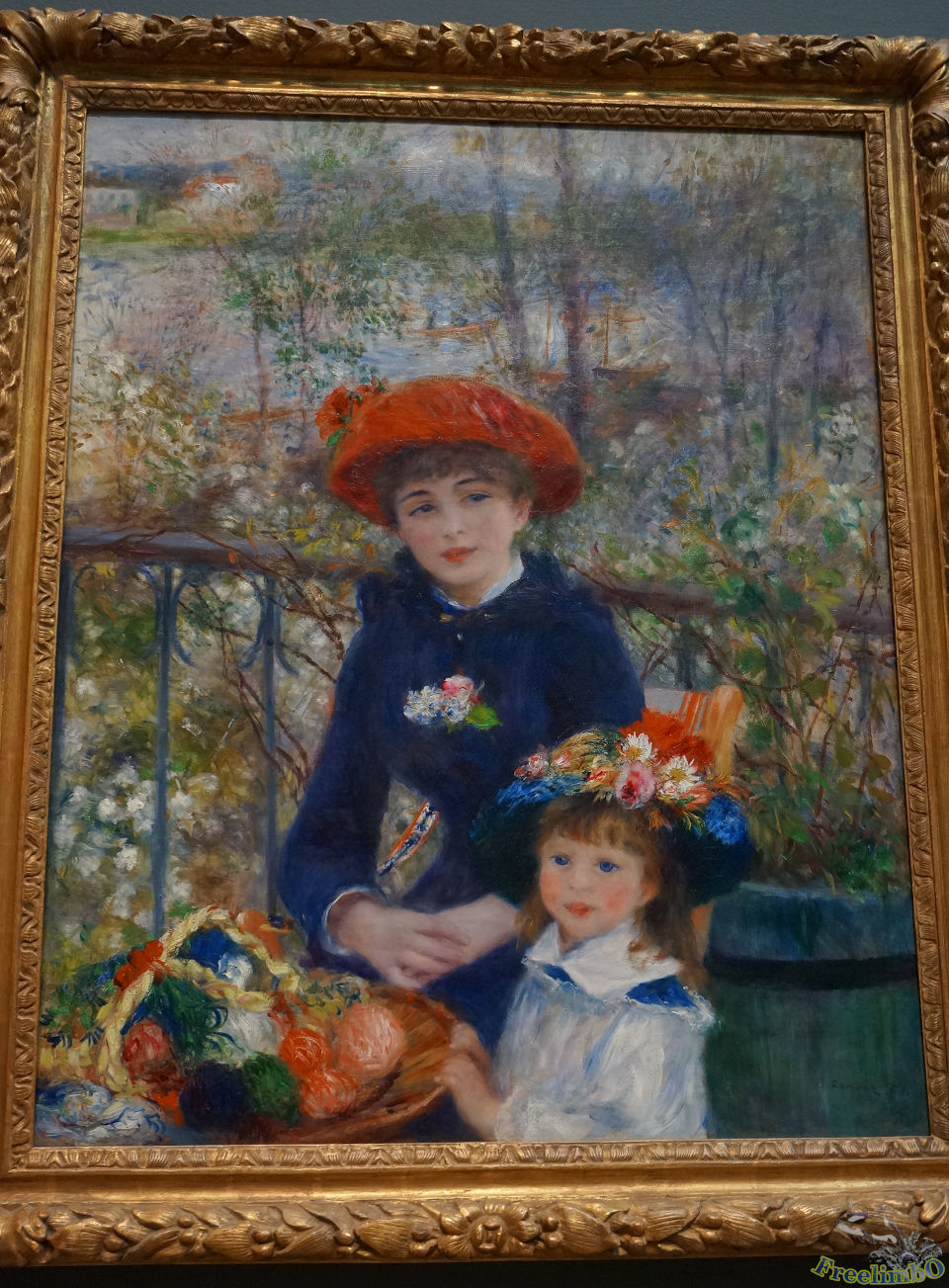
Two Sisters. 1881
The blushers were back. What a lovely pair of girls dressed with colorful flowers on the hat, clothes, table, and hair. Renoir’s low resolution on bodies and high resolution on models' eyes once again symbolized his trader mark. A thing people might not know was that the two girls were actually NOT sisters. They were called to be Renoir’s models that afternoon provisionally. The natural poses and untrained gazes of the two girls were captured through Renoir’s perception and recorded into this painting. Sort of stiff yet cute like always.
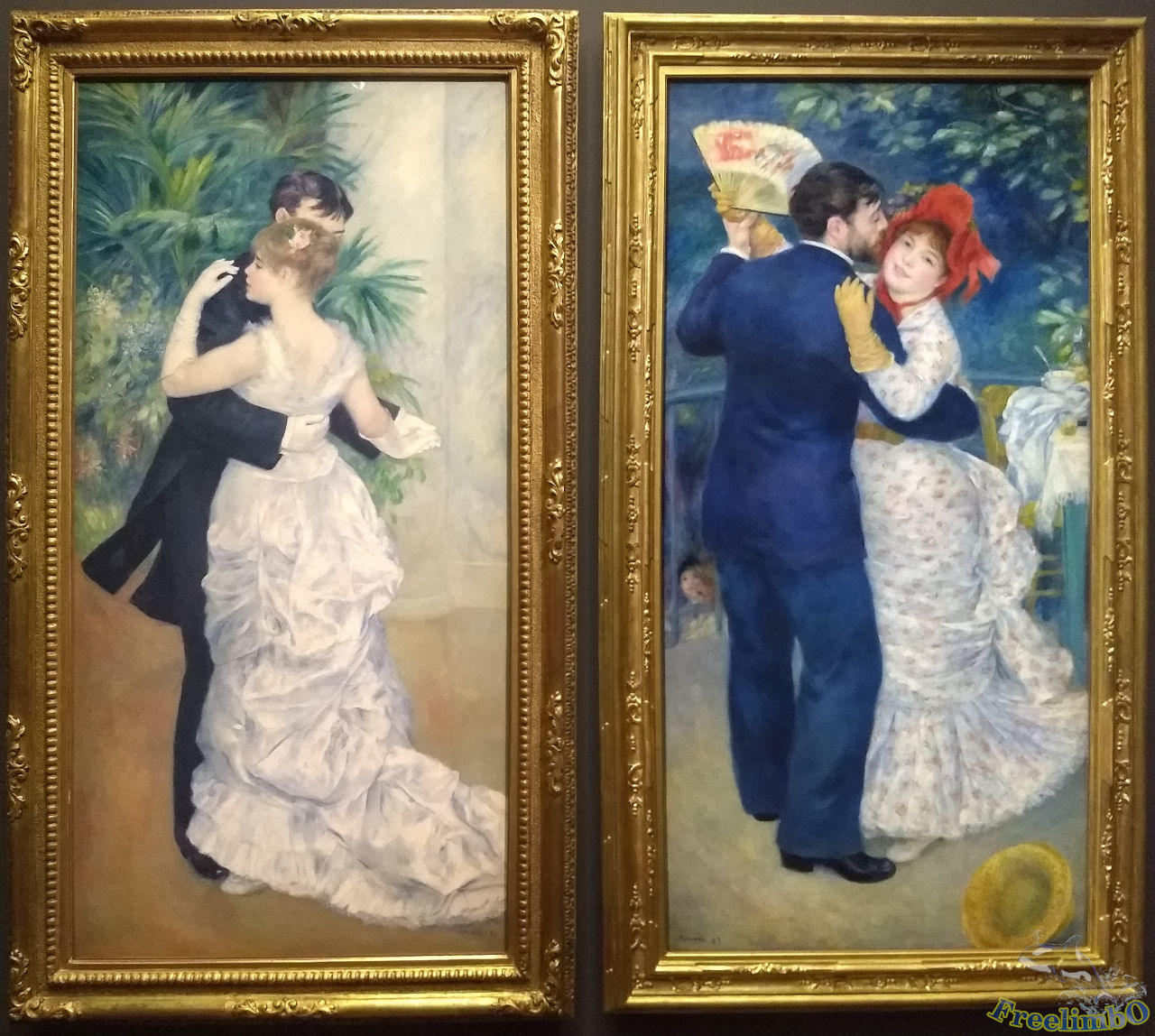
City Dance. Country Dance. 1883
This pair of paintings showed how people in two economy levels danced. Just kidding. We can see the well-dressed but poor and unimportant gentleman on the left was blocked by the lady in expensive silk dress and long gloves. In the country version, the blue suit gentleman occupied equally in the painting compared with the slightly plump lady. I guessed that Renoir was making use of the miserable gentleman as a tool to balance the weights of the composition. We can easily see the urban version was an indoor scene, while the rural couple danced in some open balcony that had other weird people walking by or peaking from beneath the balcony railings.
If we take a close look at the expressions of the two ladies, we can see the urban lady was closing her eyes and seemed focus on the dancing moves. On the other hand, the rural lady was somehow more casual and smiled with teeth facing Renoir. It was logical to reason that the rural lady was so happy without worries of etiquette nor diets.
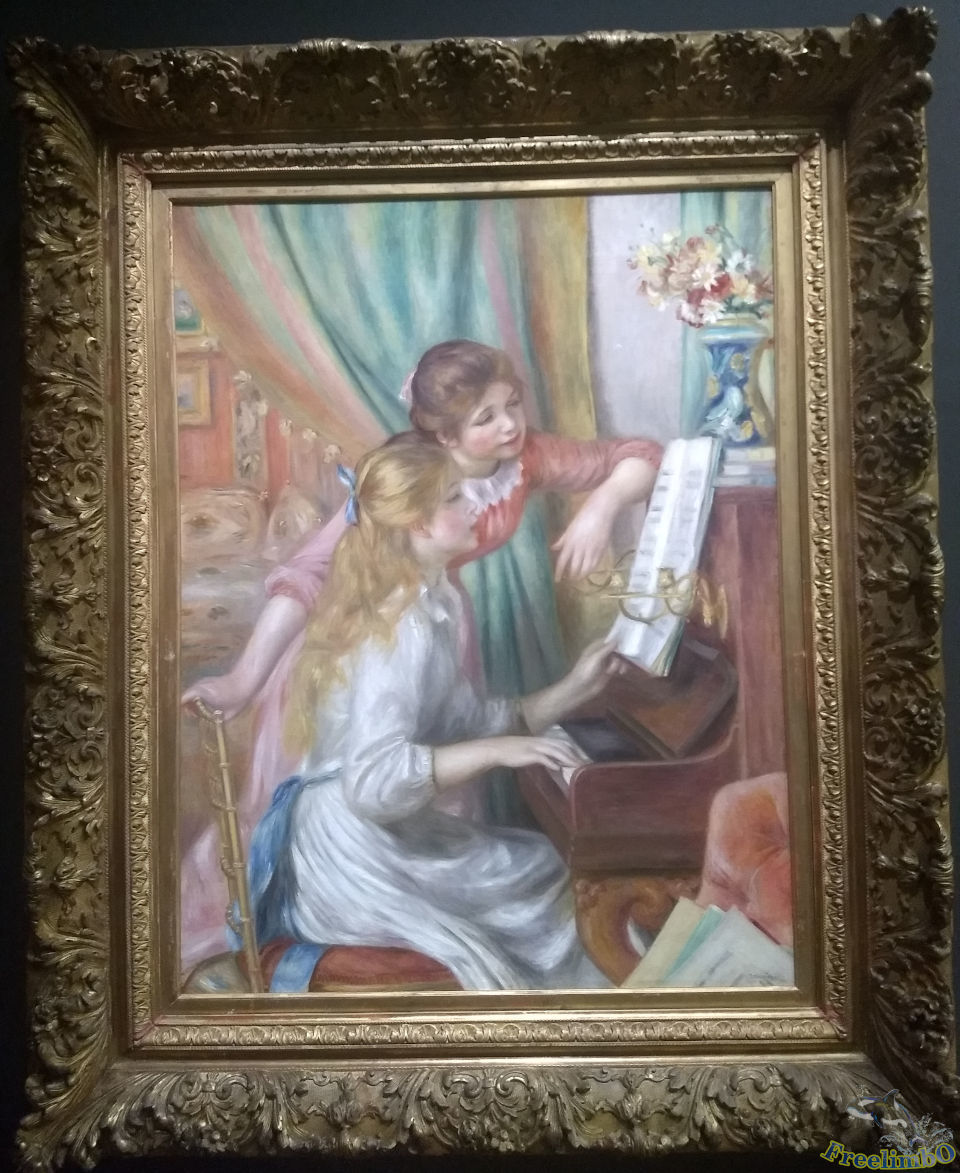
Young Girls at the Piano. 1892
Probably the most famous masterpiece of Renoir. The two angel-like girls' gloss on their healthy hairs looked charming, smooth, and soft made us want to comb their hair. We can virtually smell the aroma of the room and hear the music played by the attempting touches on piano keys. The challenging part of the Impressionism painting was to make people distinguish the two girls within such a close distance. Renoir intentionally drew some heavier and darker brushes on the white dress lady’s hair, and then carefully depicted the side-view of the white lady’s nose, lips, and chin on the slightly lower resolution clothes of the pink standing lady. We can also see Renoir enhanced and thicken the pink color’s saturation on the standing lady’s chest so that the white face of the sitting lady can be more clearly seen. Those micro adjustments were blended into the painting.
Speaking of the composition of this painting, it was not a stable triangle but still well-balanced from the standing lady’s posture: right hand on the braced on the back of the sitting lady’s chair, the other elbow leaning on the heavy upright piano, and her gaze also focusing on the music sheets. These two girls together made this painting physically reasonable with weights and forces. This masterpiece of Renoir successfully fascinated people and killed camera’s SD card space for solid reasons of beautiful girls, perfect composition, excellent command on brushes.
Georges-Pierre Seurat (1859-1891)
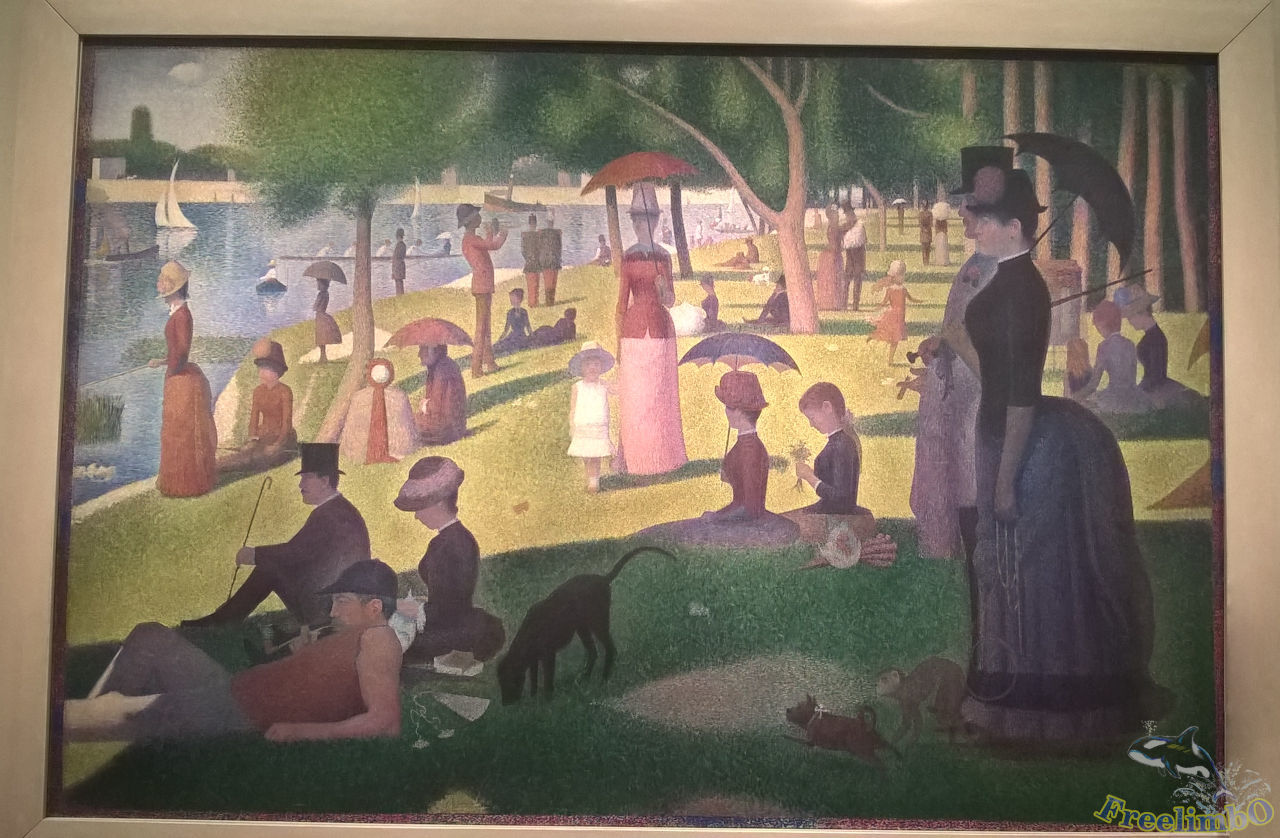 A Sunday Afternoon on La Grande Jatte 1. 1884
 |
 |
|---|---|
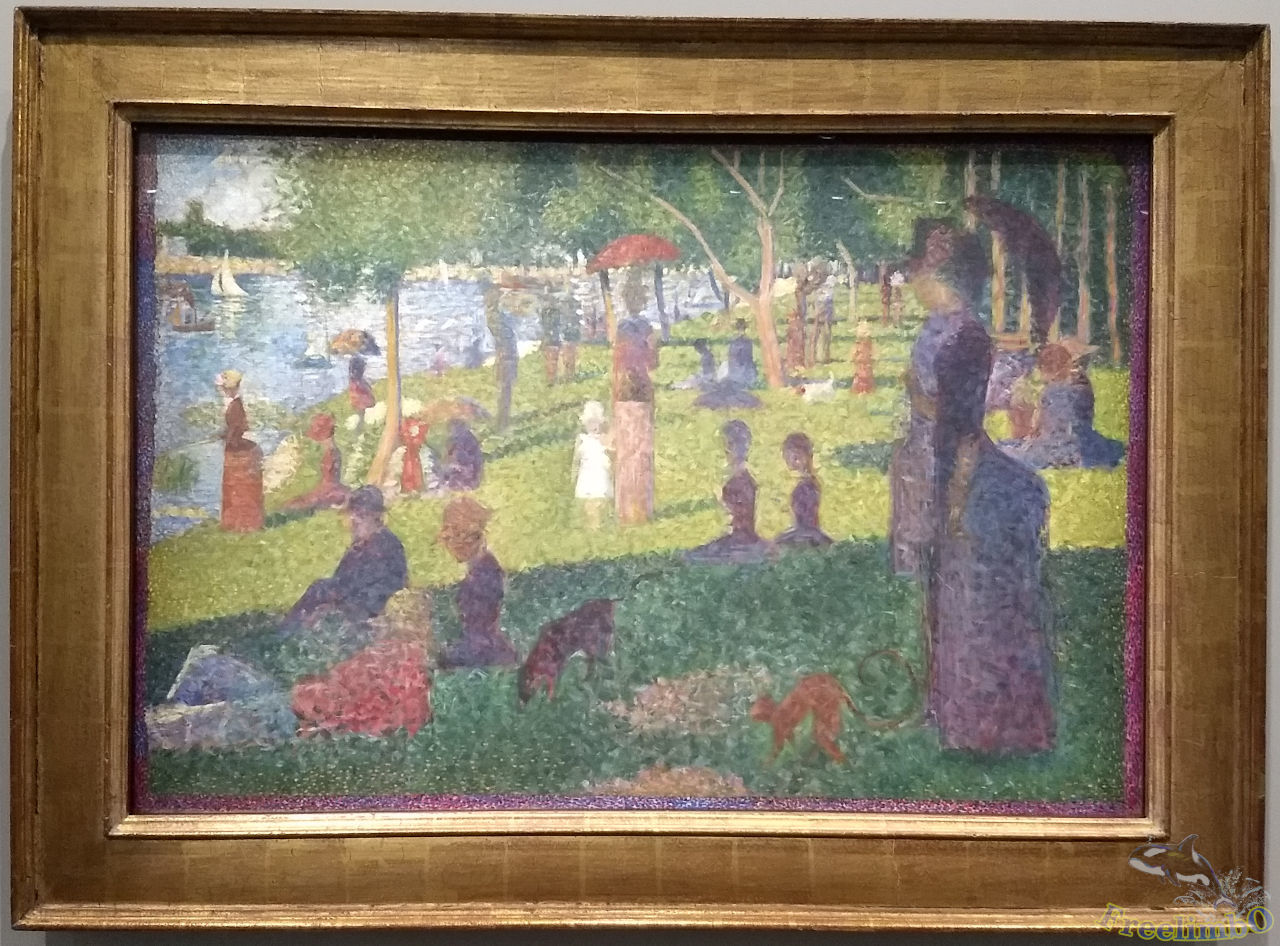
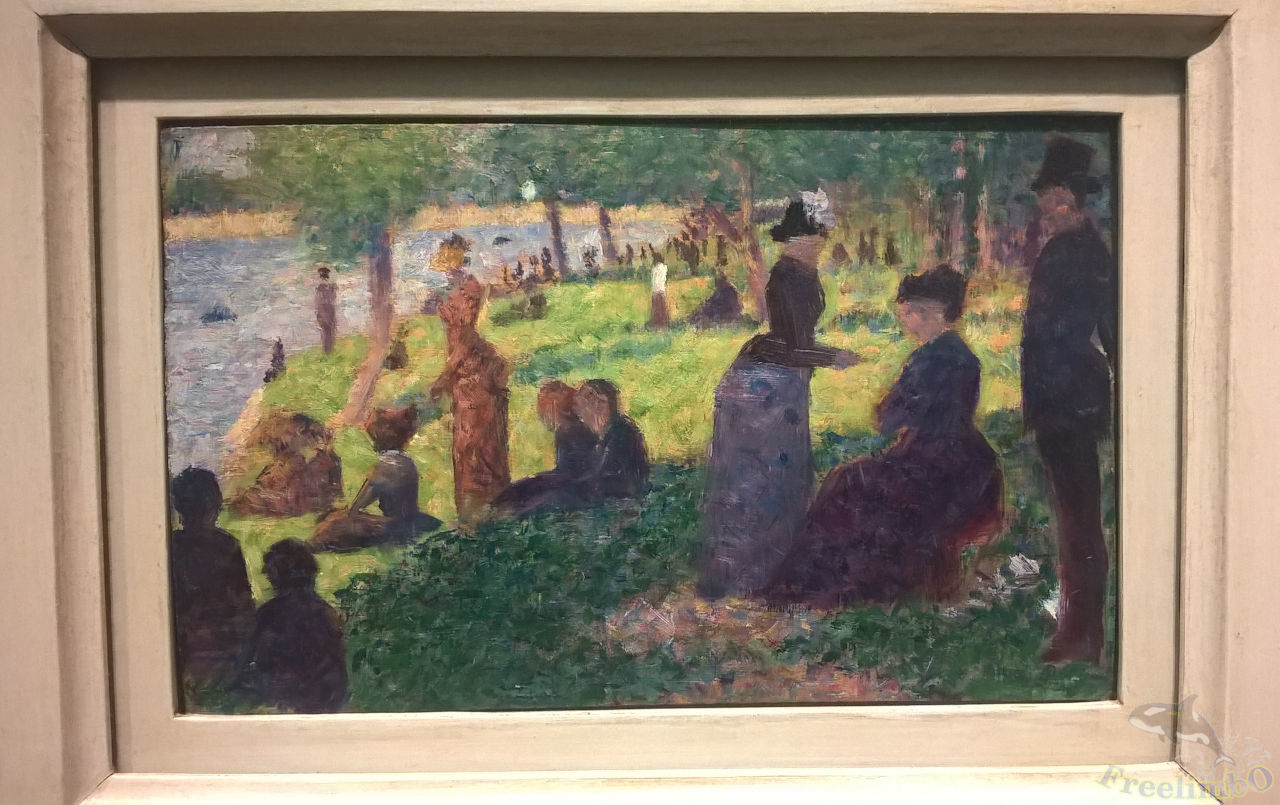
| A Sunday Afternoon on La Grande Jatte 2. 1884 | A Sunday Afternoon on La Grande Jatte 3. 1884 |
The famous series of a Sunday afternoon on island Grande Jatte by Seurat. At first glimpse, we might consider this series a bit similar with Surrealism, but not as surreal as Dalí’s works. It was, in fact, called Pointillism created by Seurat and Signac. Pointillism was evolved from Impressionism. Seurat carefully decomposed each pixel into four tiny dots of cyan, magenta, yellow, and black. He arduously dotted on the canvas with infinitesimal spacing to each other so that human’s eyes can automatically mix the dots with their densities or different extent of saturation, and then transform dots into areas or lines in the comprehended colors. The painting process was intense, and the shocks brought to people when them walked closer and closer to the paintings were intense as well.
From the three sizes of paintings for the same scene, we can see the shrinking distance of dots. Eventaully, they overlapped with each other and the pigments flew into each other, which degraded Pointillism back to Impressionism. Pretty cool.
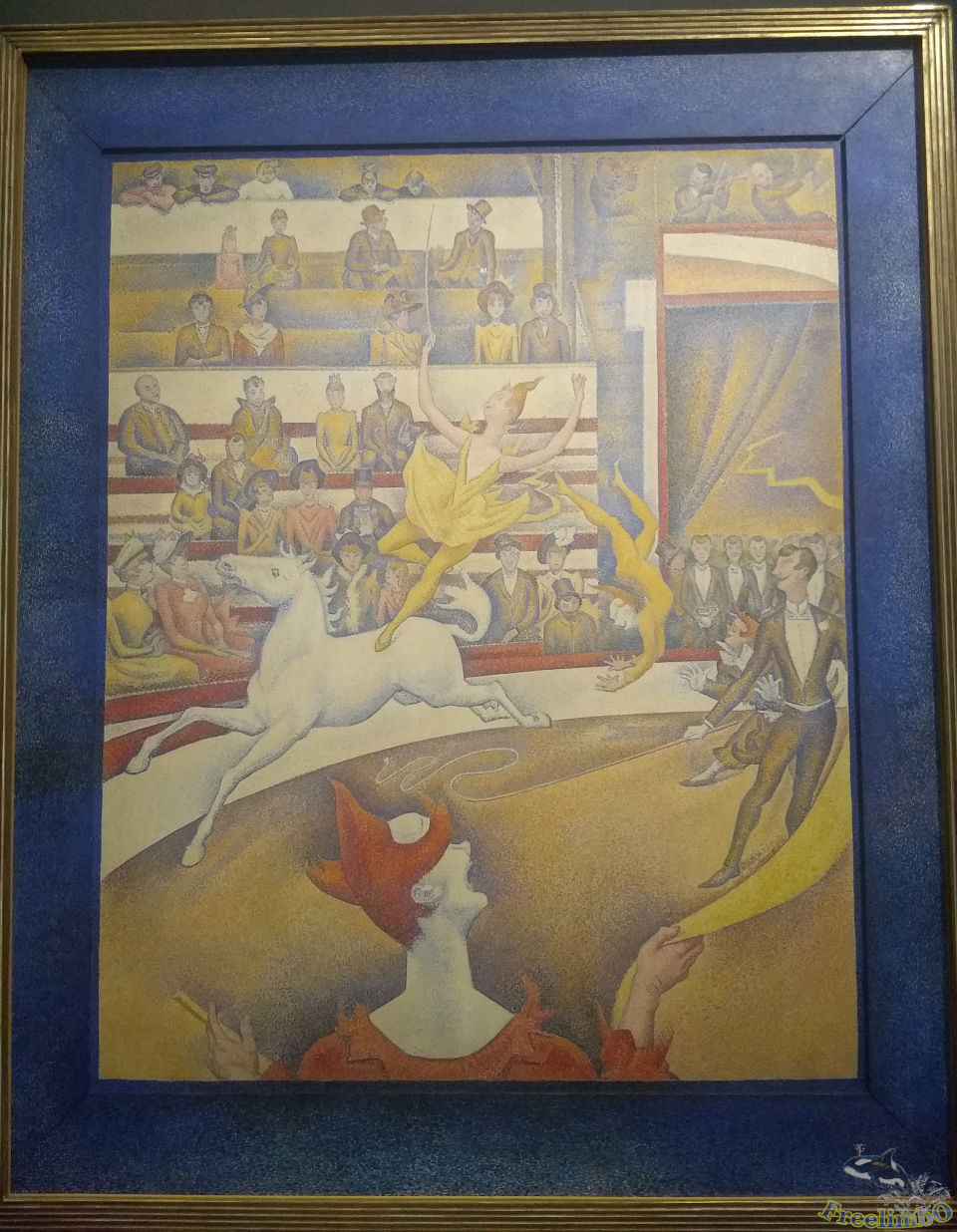
Circus. 1890
The Circus was more close to Surrealism without the participation of some imaginary objects like eyeballs or melted clocks. We can see the characters' expressions were so exaggerated and the performer on the back of the horse seemed float in the air defying gravity. Seurat composed them into a circle just like deGas' favorite style so that we can naturally following the circle and characters' visions to travel among each of them. Everyone was performing while looking and anticipating the next one’s expected moves.
Vincent Willem van Gogh (1853-1890)
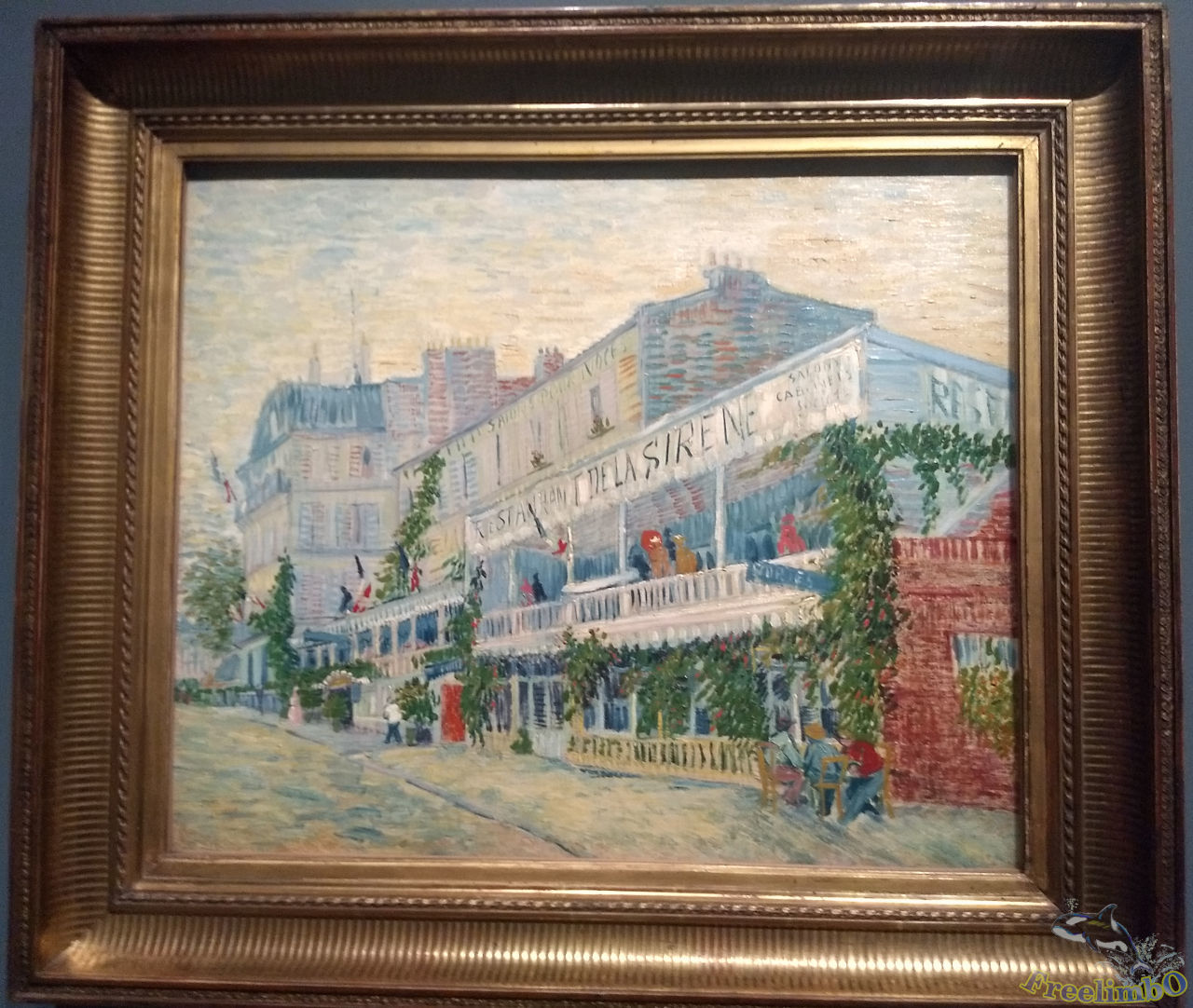
Restaurant de la Sirene at Asnieres. 1887
In the early ages of van Gogh, his painting style was quite normal and slightly hybridized with Pointillism. He can draw straight lines vertically and horizontally. The two-point perspective street view worked very well on the building of the restaurant.
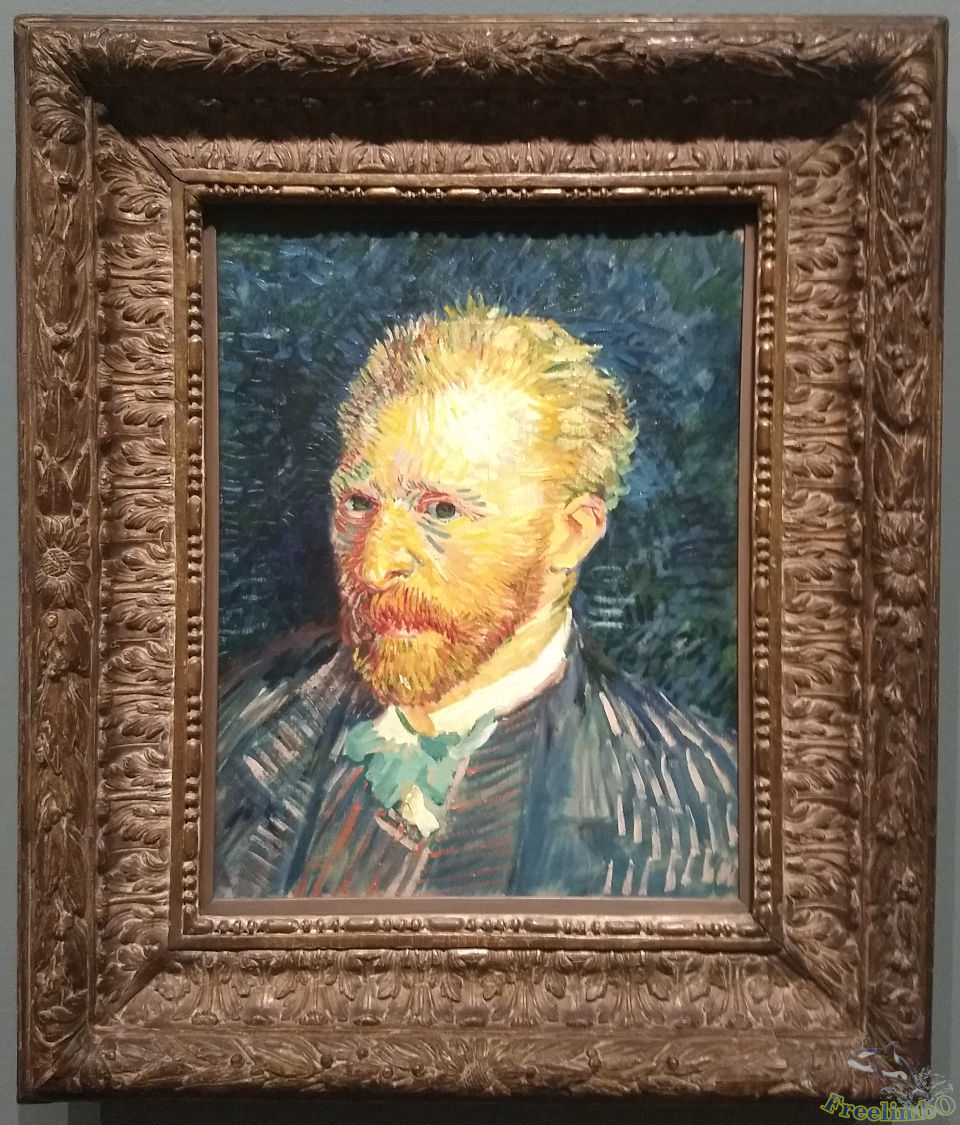
Self-Portrait. 1887
Then his lines were broken into segments. No matter it was a line or a patch, van Gogh used segments to represent it. The blended segments leveraged similar technique with Pointillism, but people categorized this style into Post-Impressionism and consider van Gogh’s style as a pioneer of Fauvism in the 20th century, which no longer cared about lights nor shadows and audaciously sneaked conflicting colors into other reasonable ones. As we can see, there were some stokes with weird color put around van Gogh’s eyes just like American Indians' painting on faces because he was expecting us to blend those conflicts into shadows.
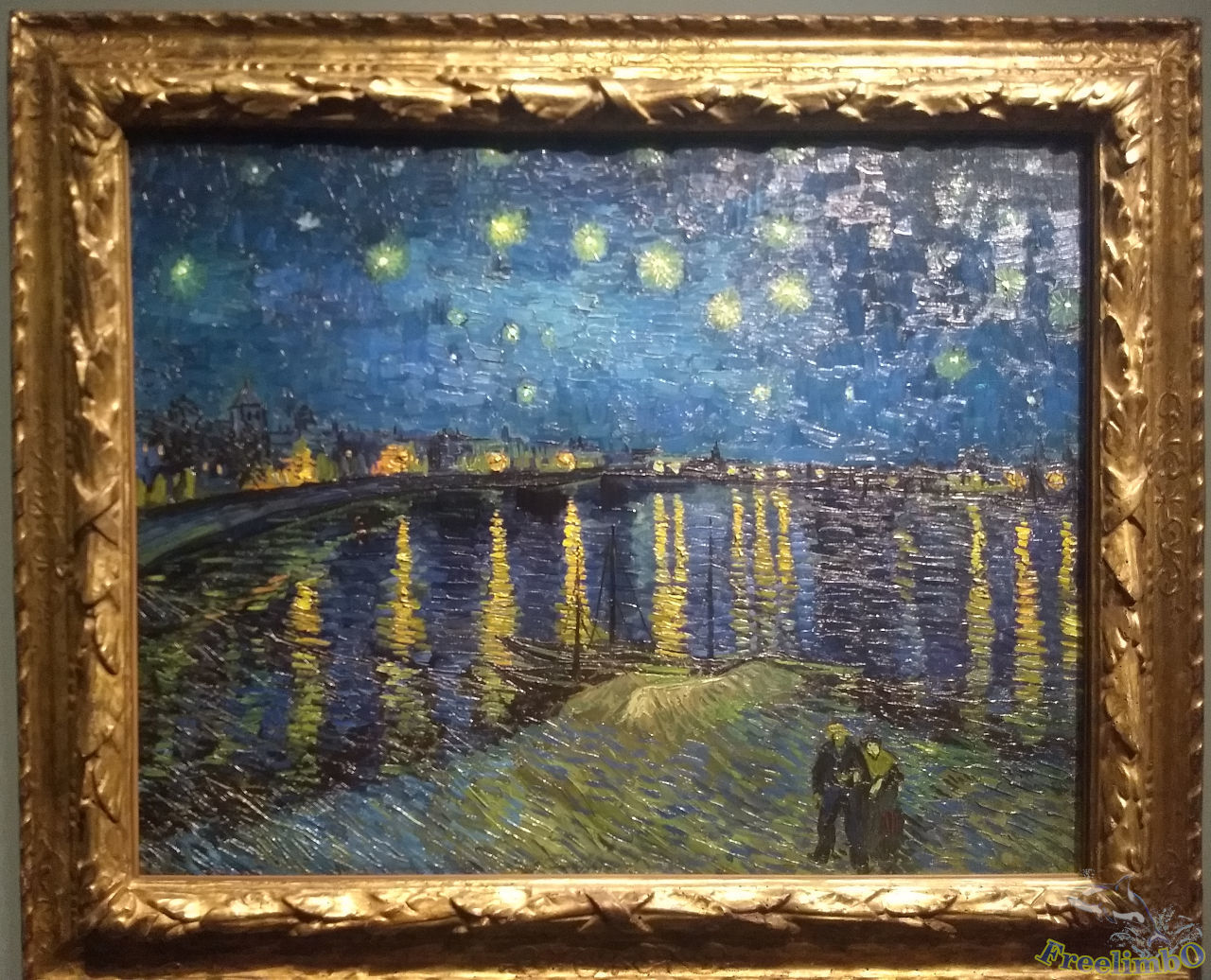
The Starry Night. 1888
Van Gogh drew two starry nights.This was the first one, which looked more normal than the one with all burning arabesque curvy segments. This was the real night scene of the Rhône river, while the other Starry Night in 1889 contained an imaginary village.
Blue and yellow kept combating with each other all over the painting, but they also collaborated to depict the dark night, mirror-like water, stars, lamps, and reflecting lights along the river. The couple walking by on the bottom right corner provided a reference scale of this scene. All the facts showed van Gogh’s mental illness was not that serious in 1888.
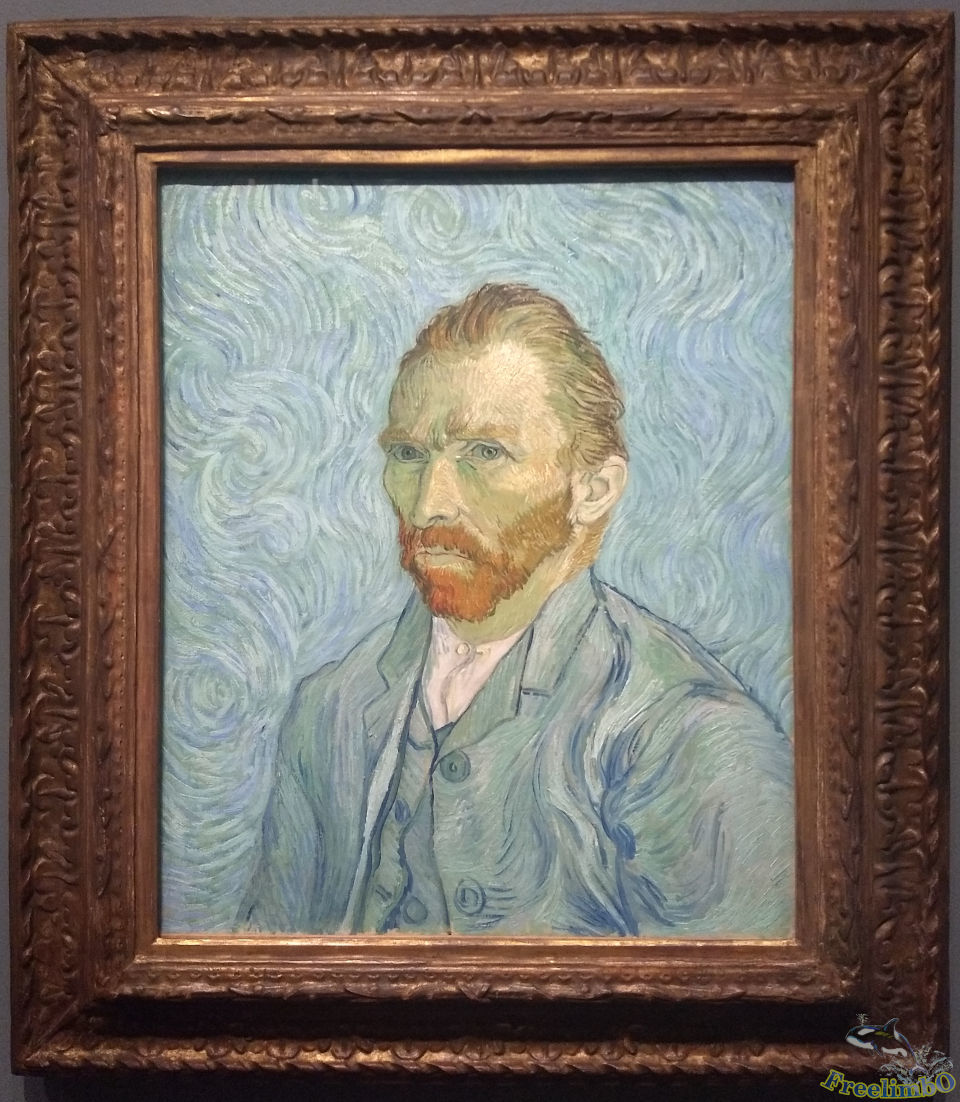
Self-Portrait. 1889
Soon it became uncontrollable. There came the hallucinative arabesque patterns, which was the more well-known symbol of van Gogh. Meanwhile, his self-portrait showed that he was tortured by the mental illness and became more and more thin and pallid.
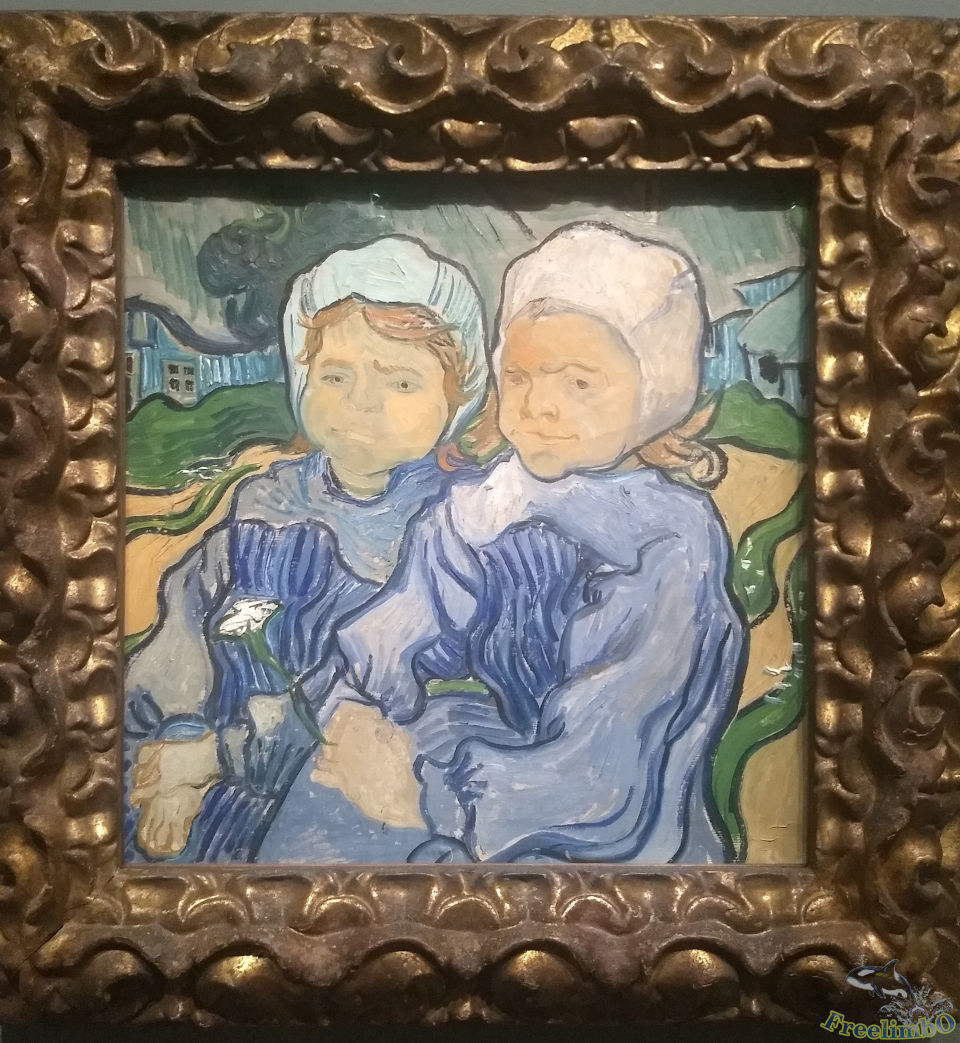
Deux fillettes. 1890
Van Gogh’s two girls, which was totally different from Renoir’s girls. The girls in this painting were heavily distorted. Their facial expressions became something between smiles and devilish mockings. Their clothes was flattened into cartoon. I was really curious about their reactions after seeing this portrait drawn by van Gogh.
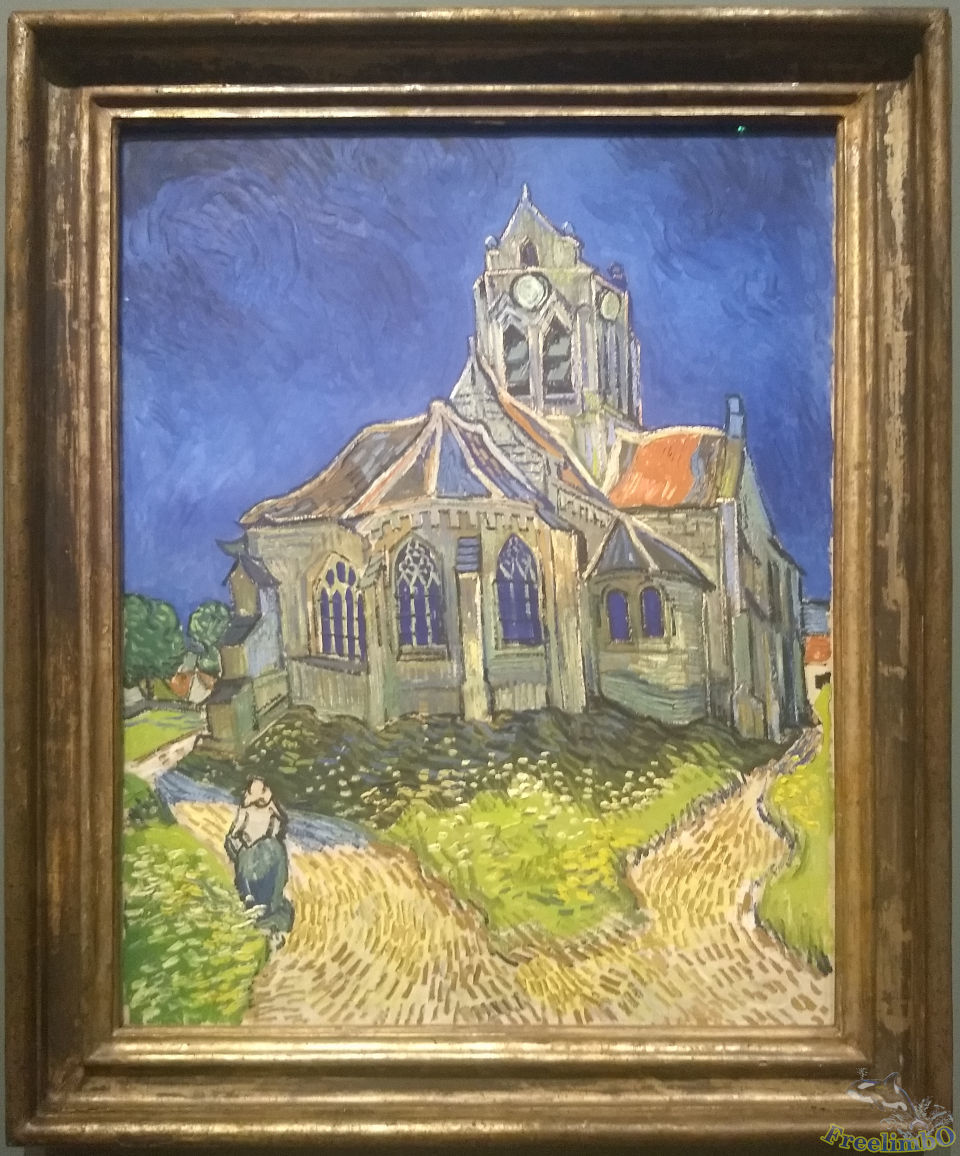
The Church in Auvers sur Oise View of the Chevet. 1890
The last painting in this post ended with the landscape painting of a church. Looked like van Gogh’s illness was alleviated a lot. The burning patterns in the sky was faded away, but he still cannot draw straight lines for the building.
We can see the shadow of the church on the grass, which was the important symbol throughout all Impressionism paintings to capture lights, shadows, and the impression at a certain moment.
Alright, that’s it. I have already walked you through the birth of Impressionism, then evolved Neo-Impressionism, and the Post-Impressionism. The history of art is always interesting and worth of your exploration.
There were still many great painters and beautiful works of Impressionism, but I would like to leave them to the next post in the future. Hope to visit more museums to closely appreciate and be impressed by more masterpieces. 😁