Painters: Chavannes, Manet, Caillebotte, deGas, and Monet.
The first time I saw an Impressionism exhibition was in Taiwan’s National Museum of History when I was in junior high and went there for a homework assignment. I was quite shocked by those masterpieces that seemly were unfinished. Of course, I learned they were drawn by impressionists mostly from France in the later 19th century.
Recently, I heard that it was inevitable for Impressionism to appear in the evolution of painting styles because the cameras were invented in the late 19th century as well. Painters had to figure out a new way to define themselves and to avoid conflicts with the ability of camera photos, which could easily copy almost any scene. If they stuck to 18th-century Realism painting styles to pursue a copy of nature, their works might become meaningless since cameras leveraging the power of science can do the same thing better.
Therefore, a brand new style was gradually developed among painters. Instead of embedded metaphors in the paintings like Romanticism, or mimicking the real scenes, painters took a big leap out of their frames to study the effect of light and colors. Finally, they found out their new value was to capture lights and contrast and then record the feeling at a certain moment, which was also called an impression.
I was lucky to have the chance to visit the art institute of Chicago and Musée d’Orsay, Paris, which collected so many Impressionism masterpieces. I felt my Ph.D. thesis had some connections with Impressionism although I was working on a computer engineer degree. Now I would like to sort out the pictures I took when I visited those two museums for my favorite paintings. Let me virtually walk you through these masterpieces through my eyes and descriptions.
Pierre Puvis de Chavannes (1824-1898)
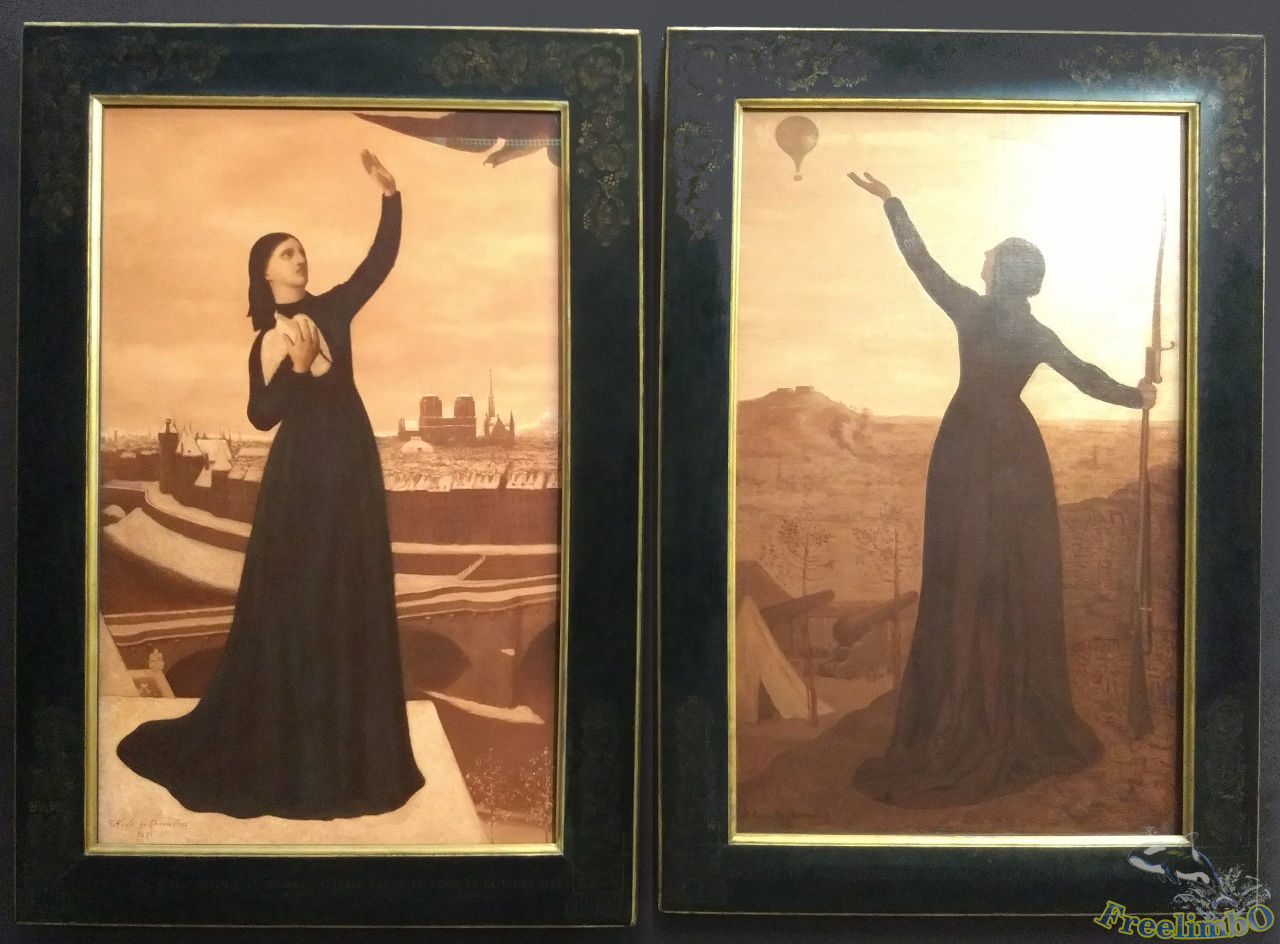
The Pigeon(left). The Balloon (right). 1870
From the description on Orsay’s, Chavannes drew “The Pigeon” and “The Balloon” during the siege by Prussian troops. The left painting had a woman protecting a message pigeon from an eagle, and the right painting showed the woman was armed and sending out a balloon. The pair of paintings were embedded with certain metaphors, which made me feel they were more close to Romanticism rather than Impressionism. Perhaps the reason I like the pair of paintings was the symmetry. The woman in both paintings was facing the center despite different reasons. Although the tone was a little bit suppressive, they together impressed me with balance and solace.
Édouard Manet (1832-1883)
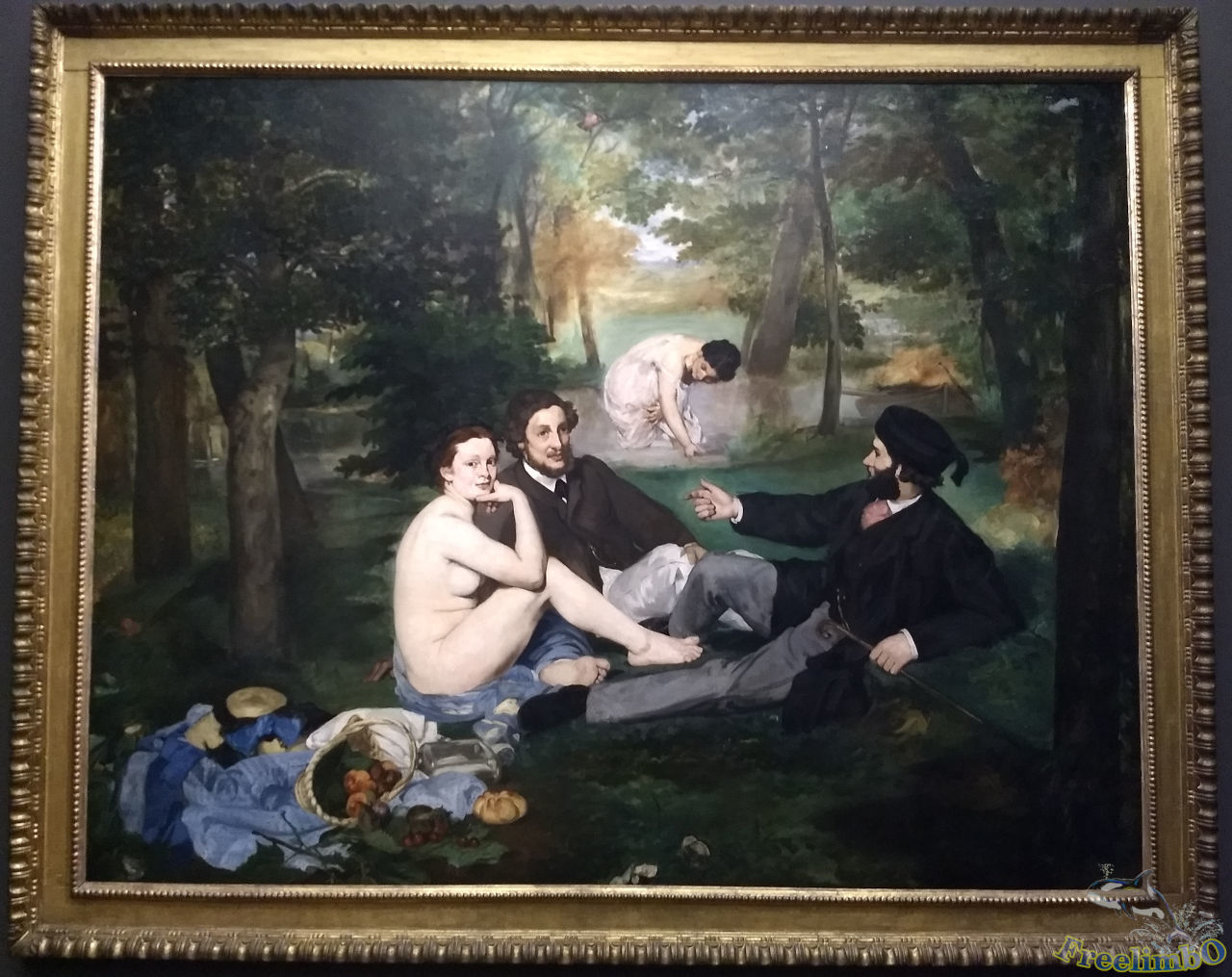
Luncheon on the Grass. 1863
I wasn’t a big fan of Manet’s, but I put his Luncheon on the Grass in this post for a comparison with Monet’s same title work. I personally liked Monet’s Luncheon on the Grass more and later I would talk about the reason.
Gustave Caillebotte (1848-1894)
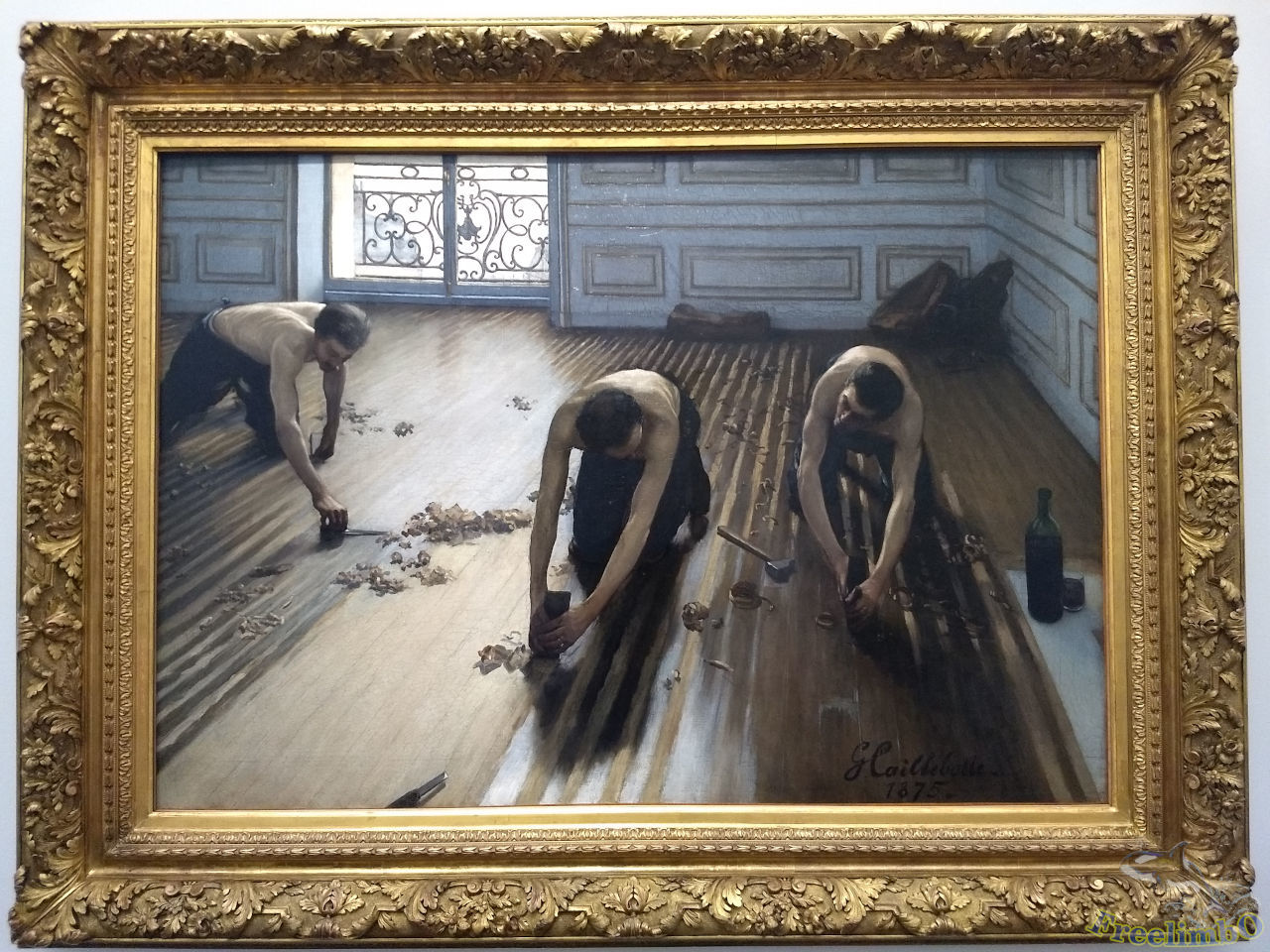
The Floor Scrapers. 1875
Caillebotte’s works shocked me either because of the details or the size of his painting. For this one “The Floor Scrapers”, I was deeply impressed that an impressionist can also draw something with so many details while successfully conveying the striking factors of the scene. Those details included the perfect one-point perspective parallel pattern on the floor and the right wall, the rigorous straight horizontal lines on the wall, and the curved metal railings of the door toward the balcony. At the first glimpse, I thought someone mistakenly put a Realism painting in the Impressionism exhibition room, but soon I understood what was the moving impression Cailebotte wanted to capture. It was the disappearing reflecting lights on the floor. The three workers were using their tools to scrap the wooden floor, and the shining gloss would soon become lifeless dull wood. The smells of scrapped wood chips and the sweat of the three topless workers also filled the air and made me feel the change was happening, and the light was slowly vanishing.
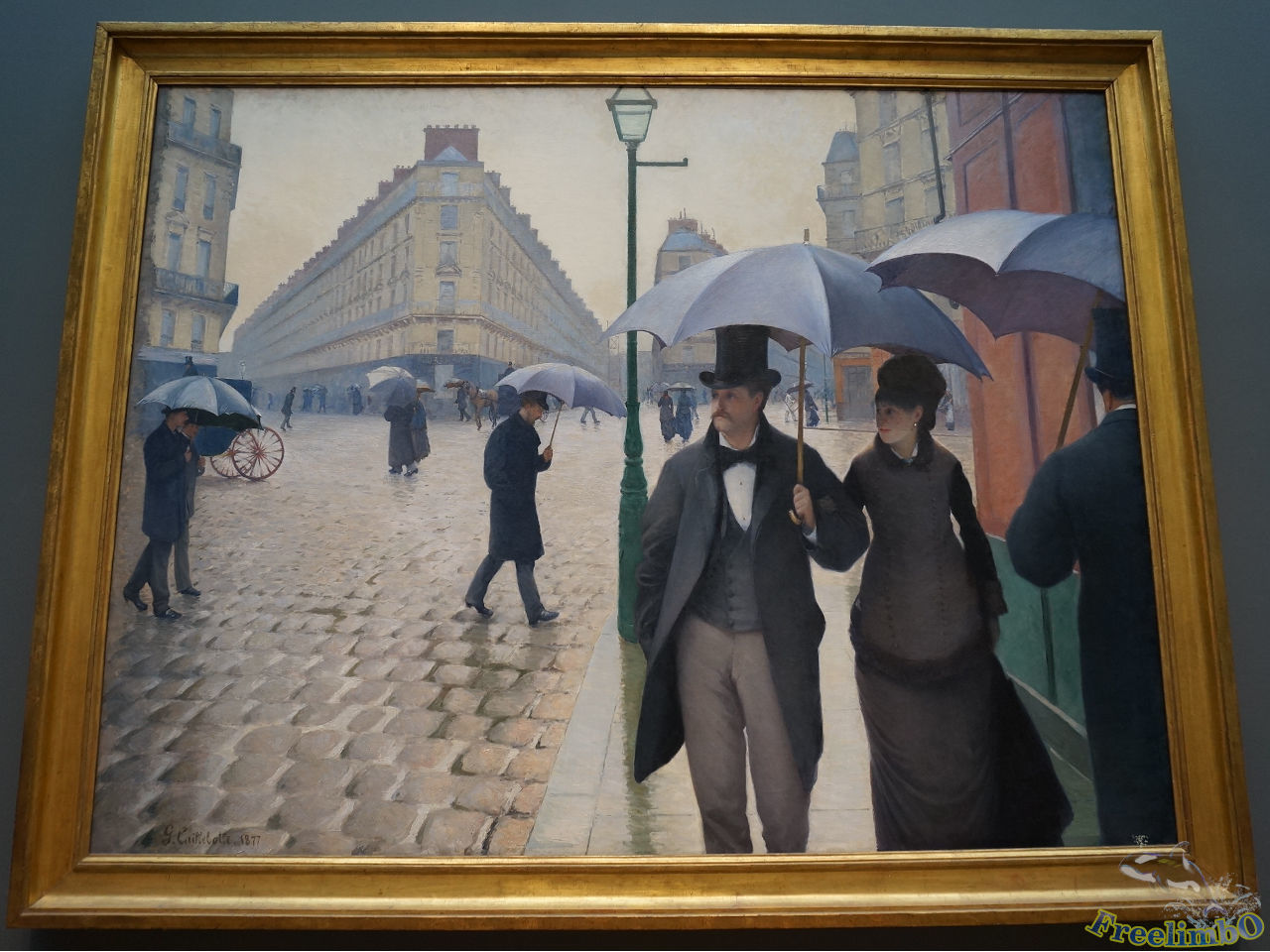
Paris Street Rainy Day. 1877
This painting was astonishingly big. The three people on the right pedestrian walk was in the same size as a real human. Caillebotte’s impression of the rainy day was precisely captured with the reflection of the lamppost and the puddles on the stone road. I can sense the cold temperature of the rain from people’s clothing. I can also feel the slippery walk from the water on the ground. All the bad memory of falling on rainy days were recalled by this work.
Edgar Degas (1834-1917)
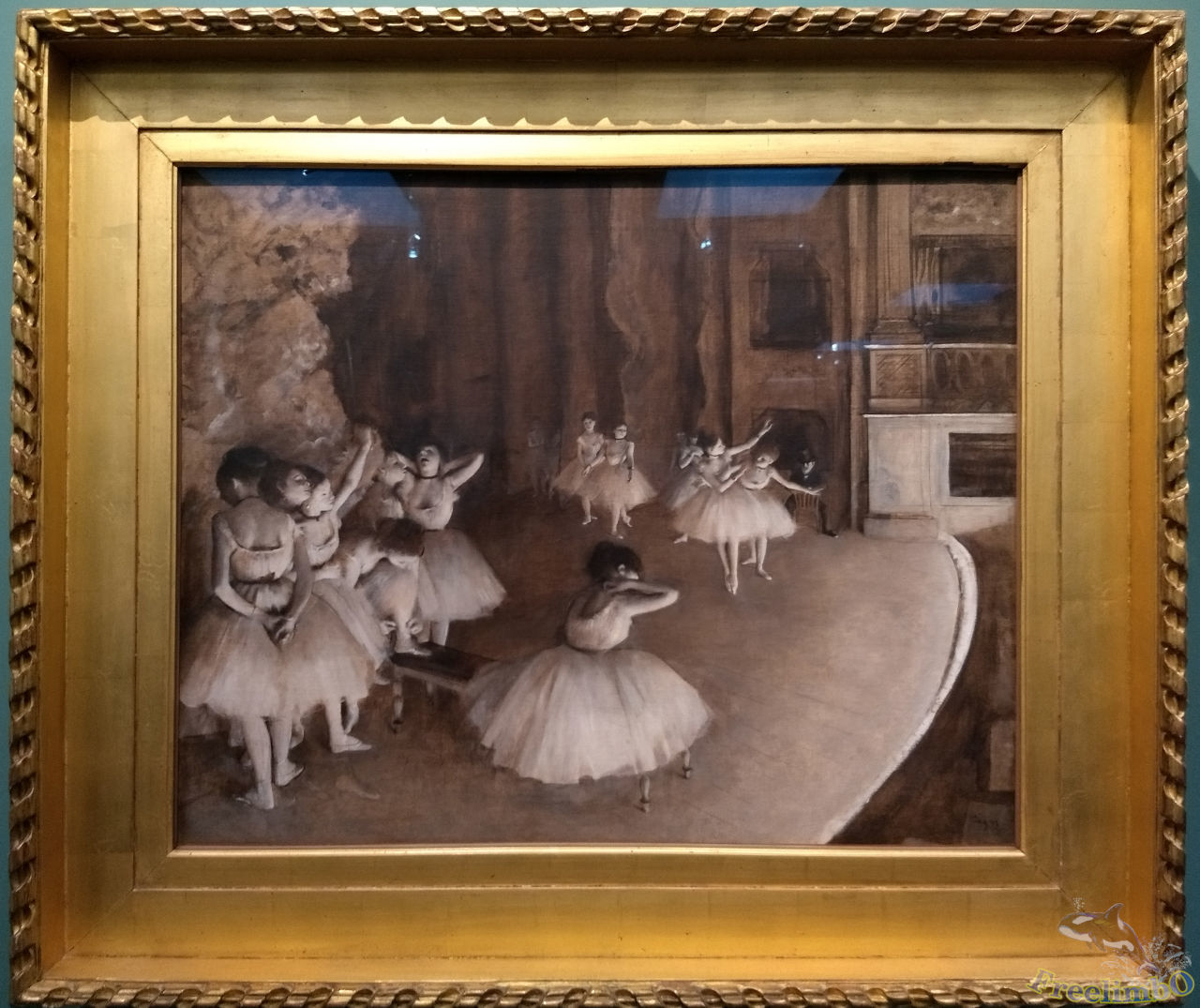
Dancer Large Arabesque Third Time. 1892
I was super lucky to visit Degas’s special exhibition. There were countless deGas' ballet dancers. Some paintings were more close to drafts because deGas thought it was enough for the moving factors to be touched and captured. I picked this one here because I thought this work fit deGas' style very much. He always liked to keep a little room in the center of painting absent so that the unoccupied area can form an anticipating or concentrating atmosphere. We can see some dancers standing, some sitting on the bench, and yet some already dancing in a line from the farther corner, but all of them coincidentally avoided the center of the stage. Please go ahead to check other deGas' works to see if the centers were always left unoccupied.
Claude Monet (1840-1926)
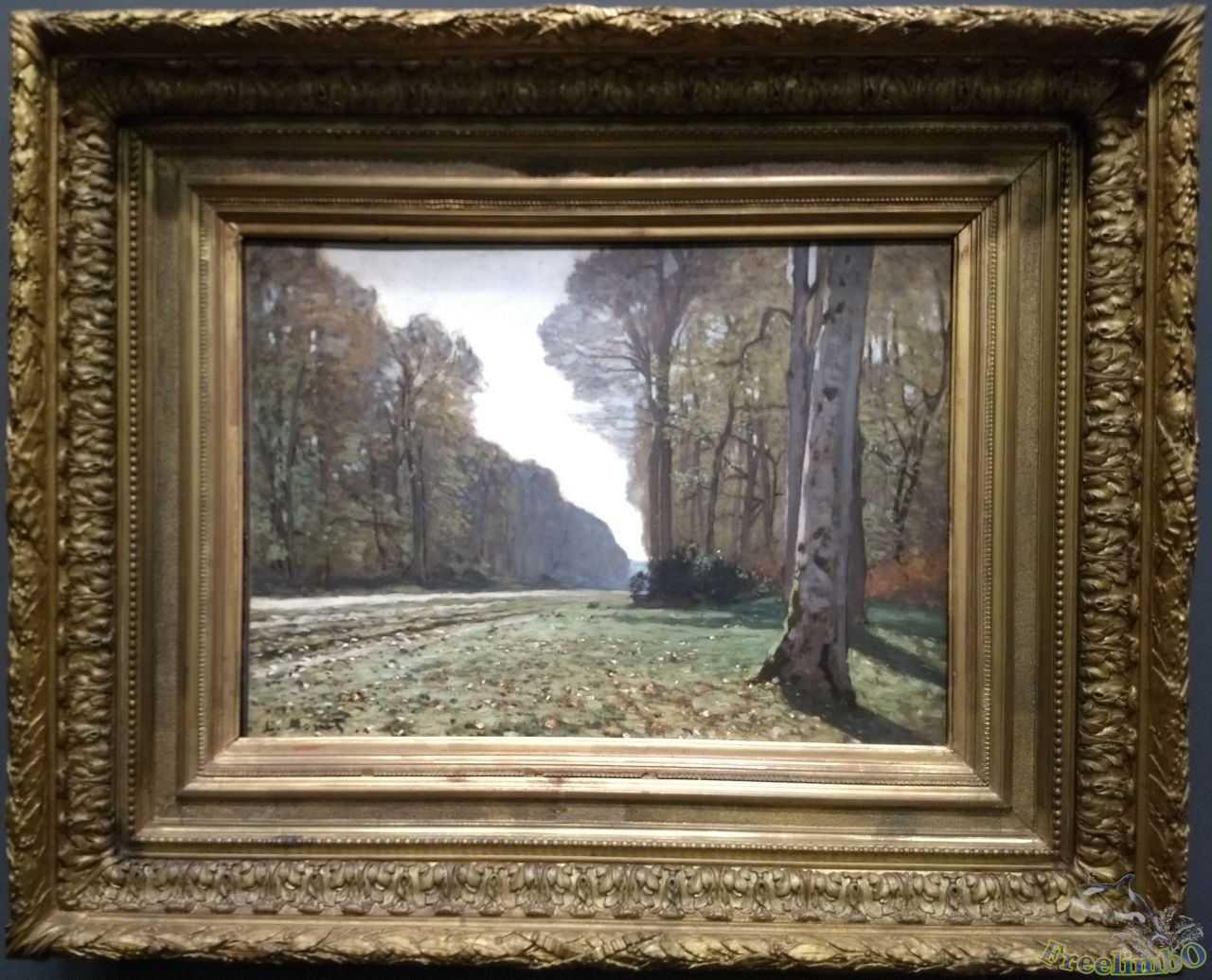
Le Pave de Chaill. 1865
I like Monet’s landscape painting because the way he capture the lights and details was better balanced than others did. This painting was not as famous as his lily pond series, but the straight road through the woods and the scattered leaves on the ground together made me feel there could come a fast-driving car or carriage rolling all the leaves up.
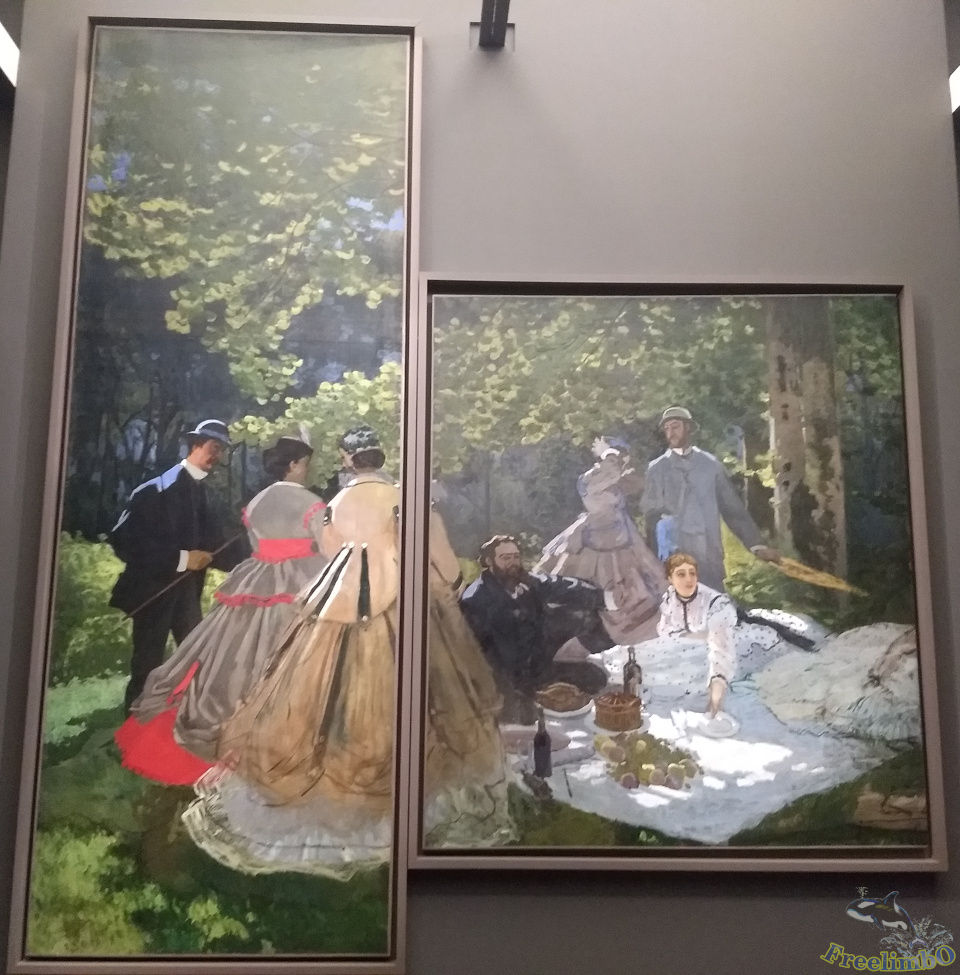
Luncheon on the Grass. 1865
OK, there comes Monet’s Luncheon on the Grass. This one has a vivid symbol of Impressionism, which was the light spots on the white square cloth on the grass. The shadow of the tree on the left painting’s ground also showed the captured lights shining through those thin leaves. All those details served the purpose to capture the lights and the happiness of the people’s gathering.
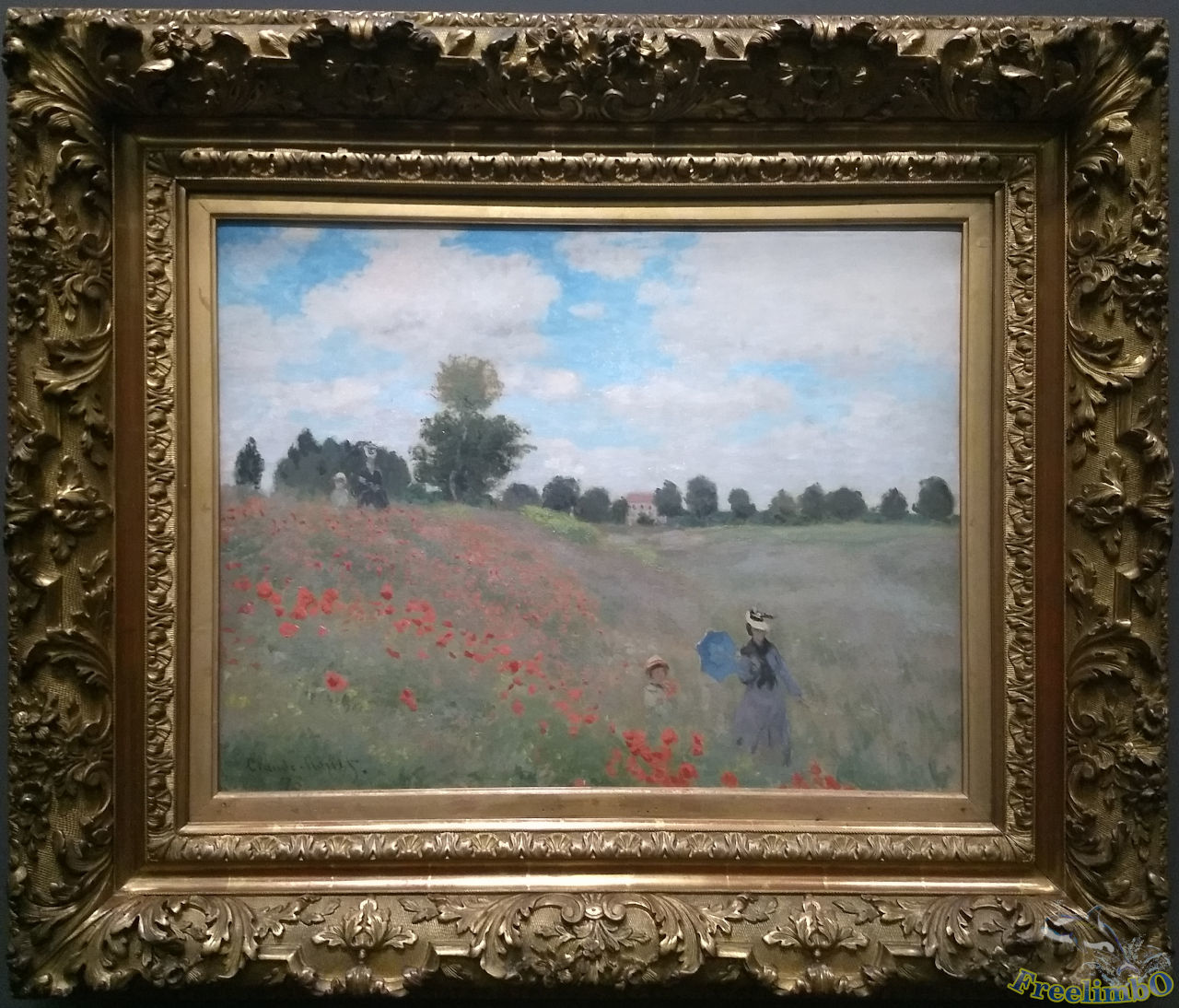
Poppies. 1873
I wasn’t so fascinated by this work until I saw a real hill full of red poppies. That was almost the same scene of this painting. Then I thought I should include Monet’s poppies in the post to express my feeling. I saw the painting first and then went to a real field with poppies, and then I was shocked. The sequence was funny yet still impressive.
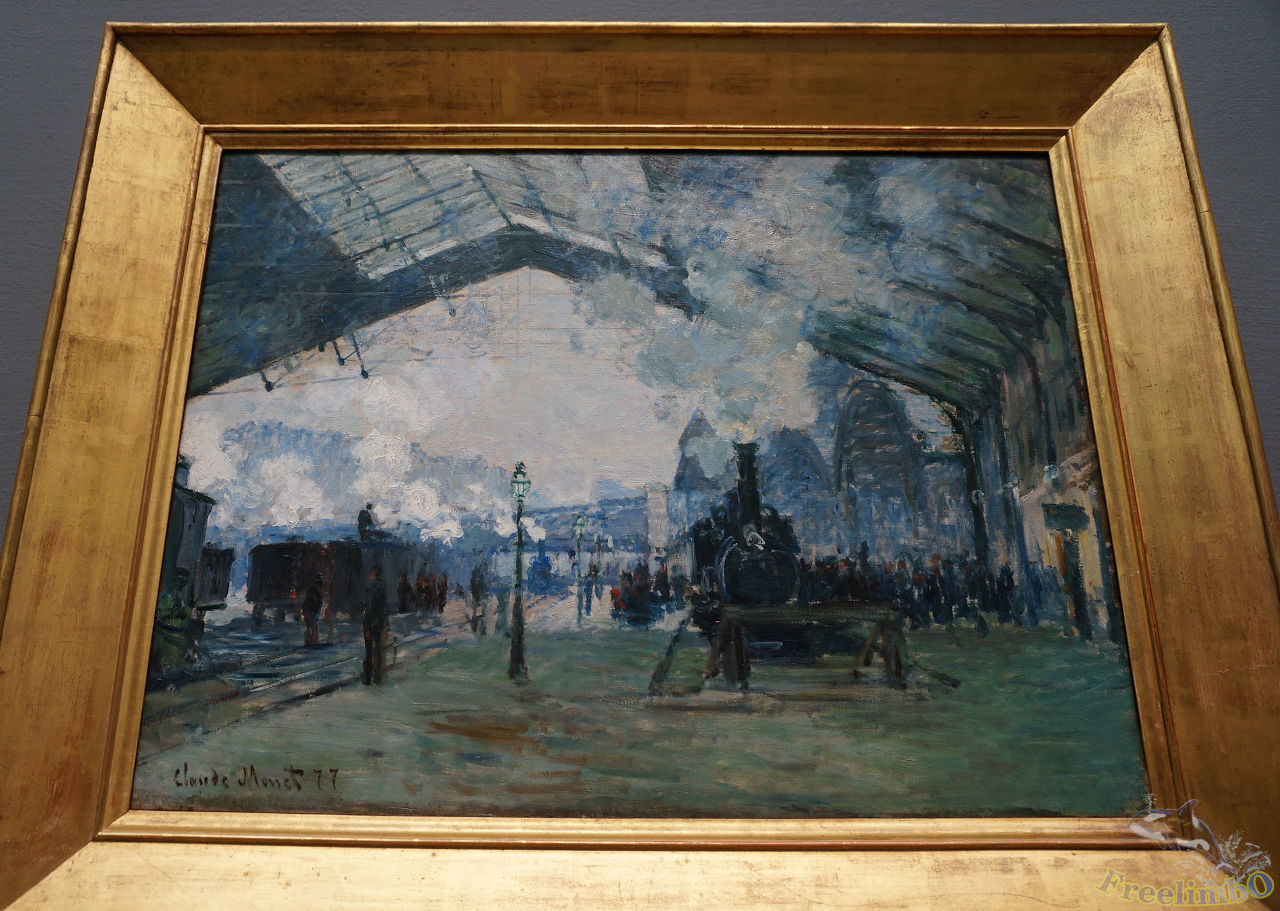
Gare Saint Lazare. 1877
This is one of Monet’s train station series. The gray and white smoke emitted toward the high ceiling was visualized by morning’s cold temperature. Monet was not good at mechanical, but the major shape of the locomotive, the smoke, and the crowd made us believe the train was just stopped at the station. When I was young, my parents often took me to our hometown by train. This painting reminded me of the cold morning, the bad smell of trains, and the noisy crowds.
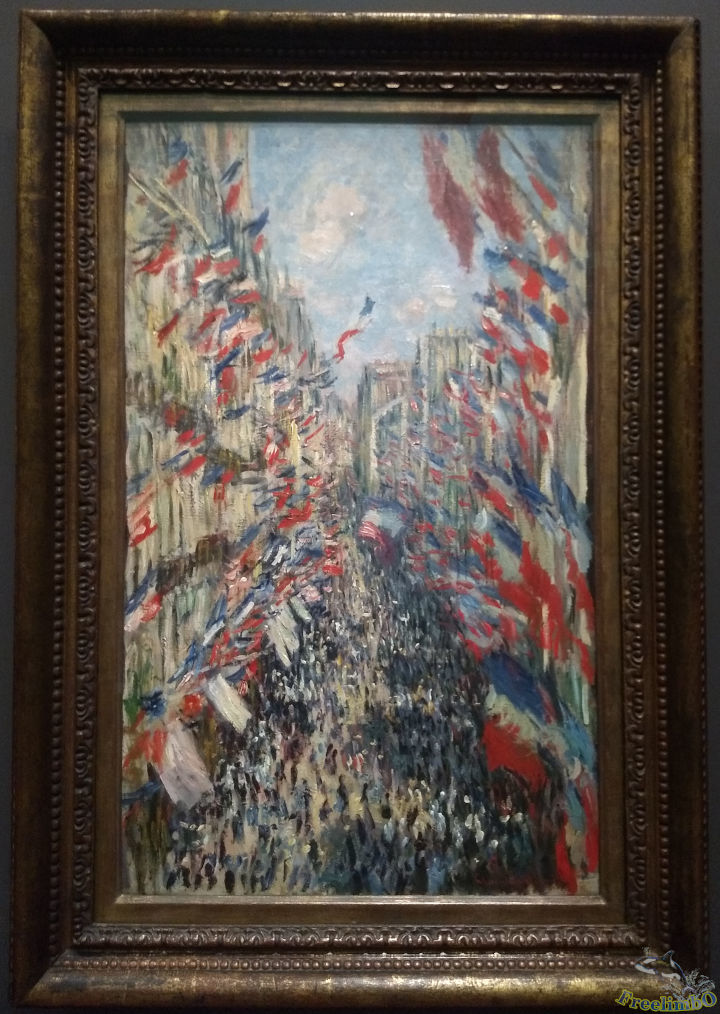
La Rue Montorgueil. 1878
There were so many people on the street celebrating their national holiday. Monet carefully drew buildings' shadows onto the people. The flags on both sides of the street were flapping with winds and used to express the bustling of people. When I saw this painting, I was so infected by the national holiday’s cheerful atmosphere.
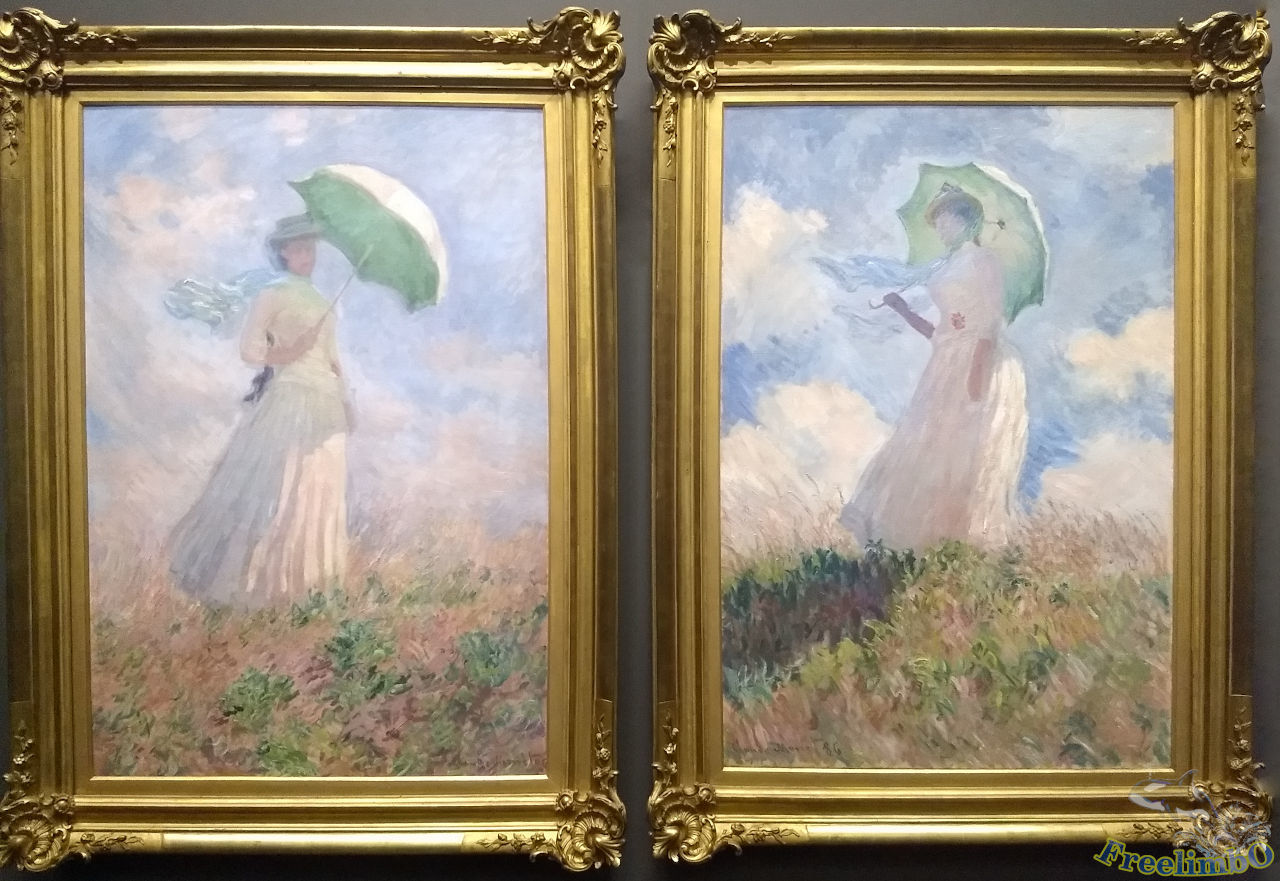
Preparatory Sketches for Plein Air Figures. 1886
Another pair of paintings, but this time something was different. The woman on both sides facing to the center of the two paintings, but their umbrellas were used to shade the sunshine and tilted against the wind. I can tell the direction of sunshine by the shadow on the right painting, and the breeze must come from the right side so that the skirt swayed slightly to the left. This is a painting making me feel the comfy sunny day.
 |
 |
 |
|---|
 |
 |
|---|
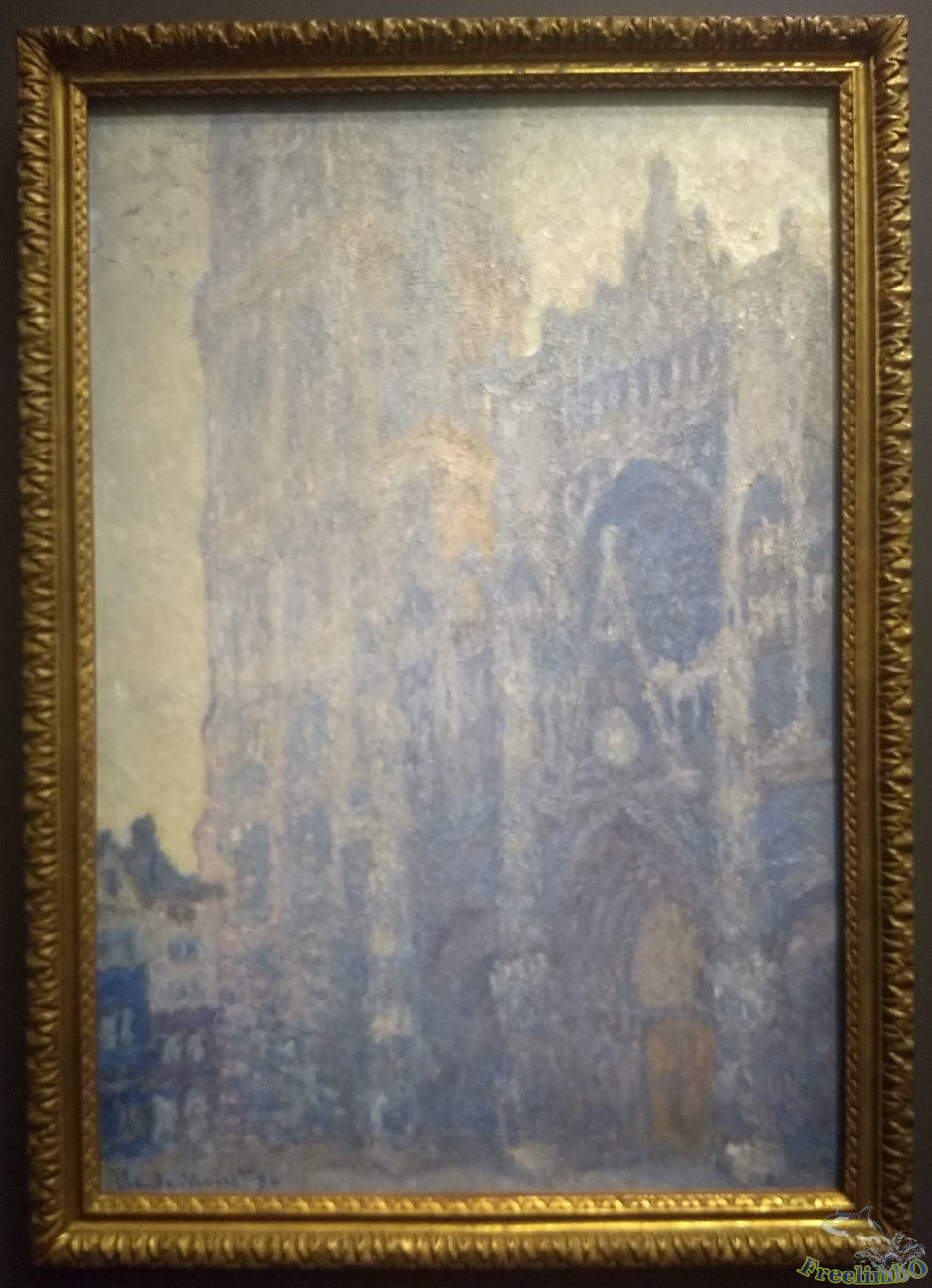
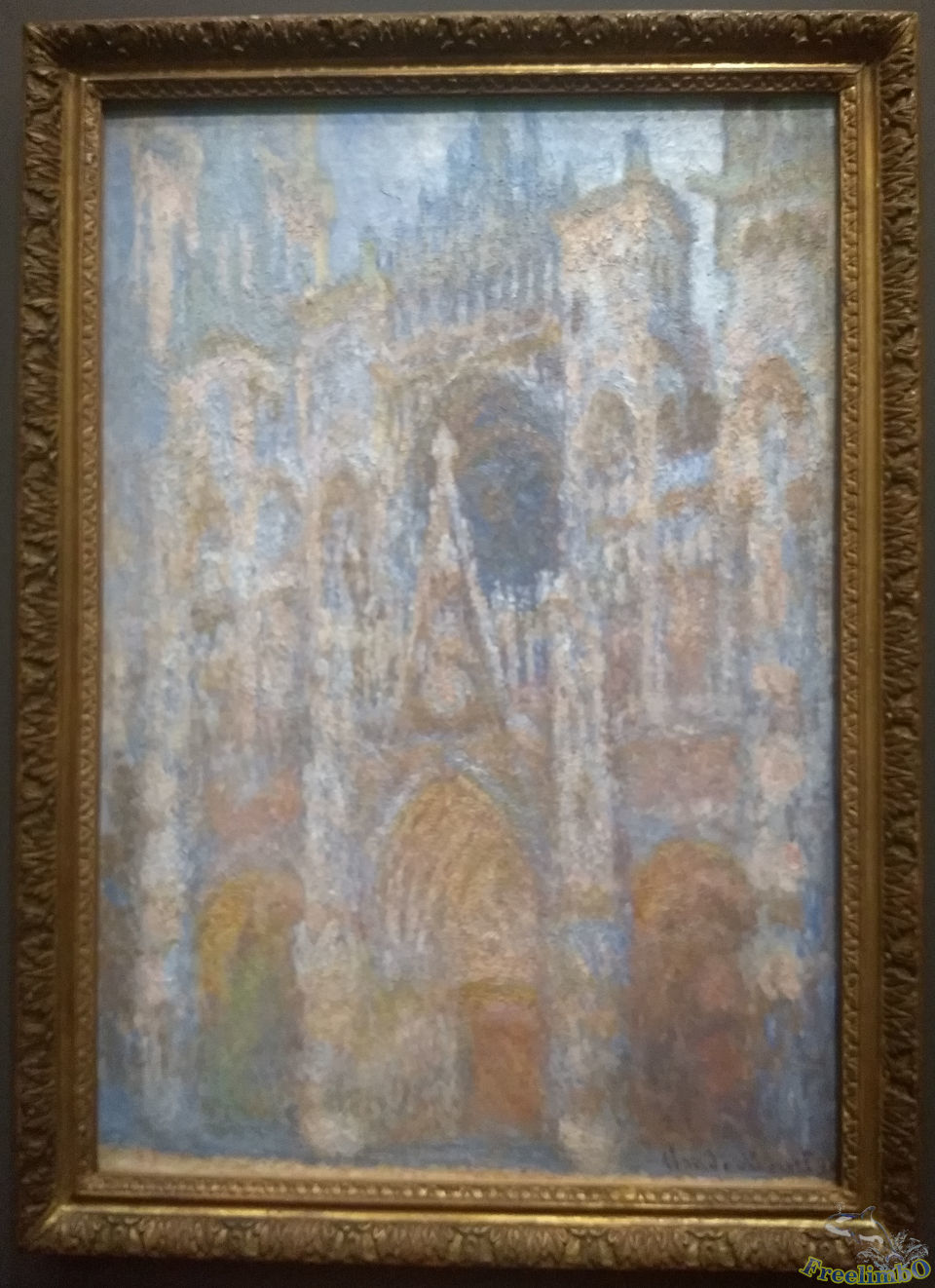
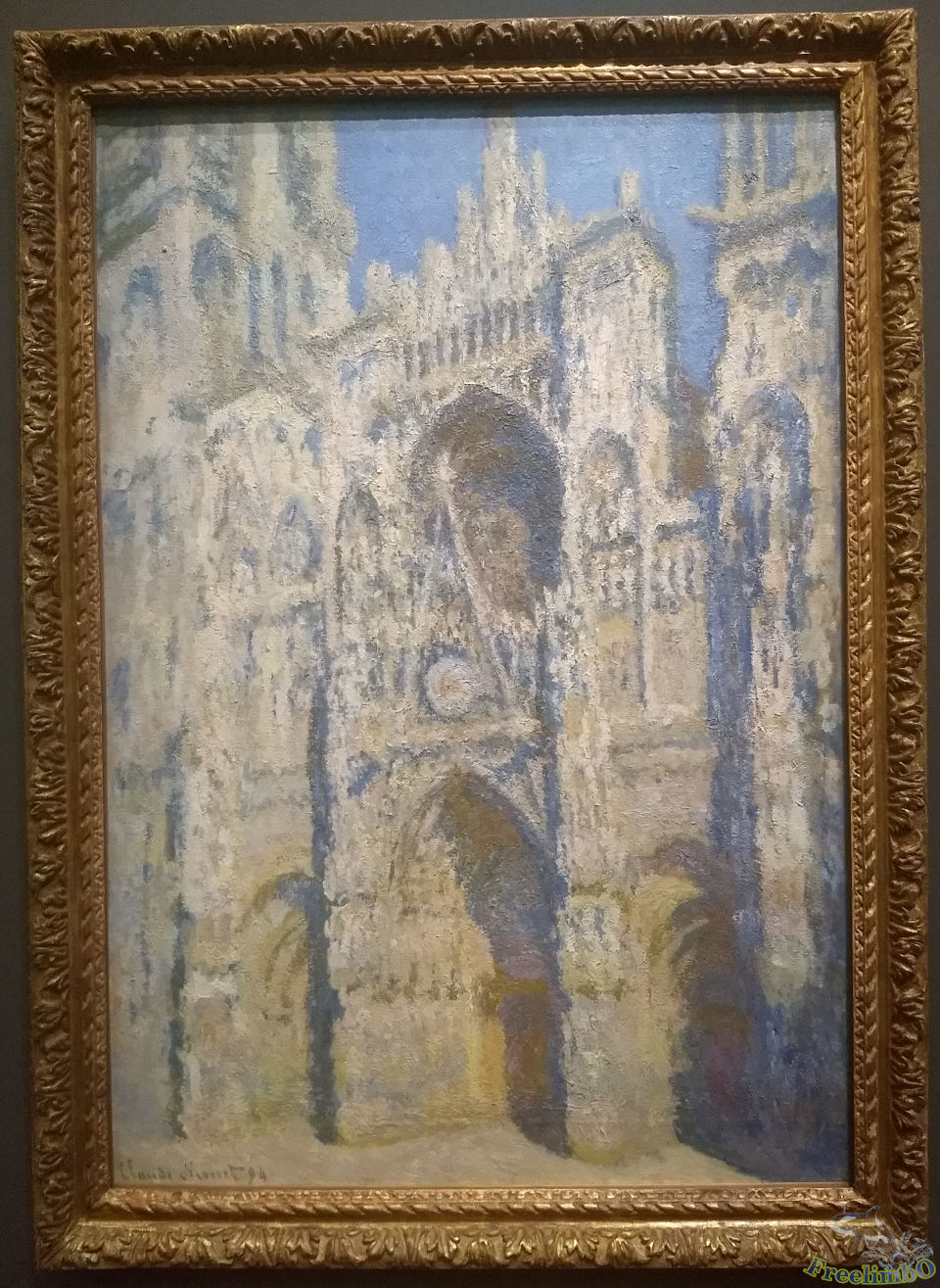
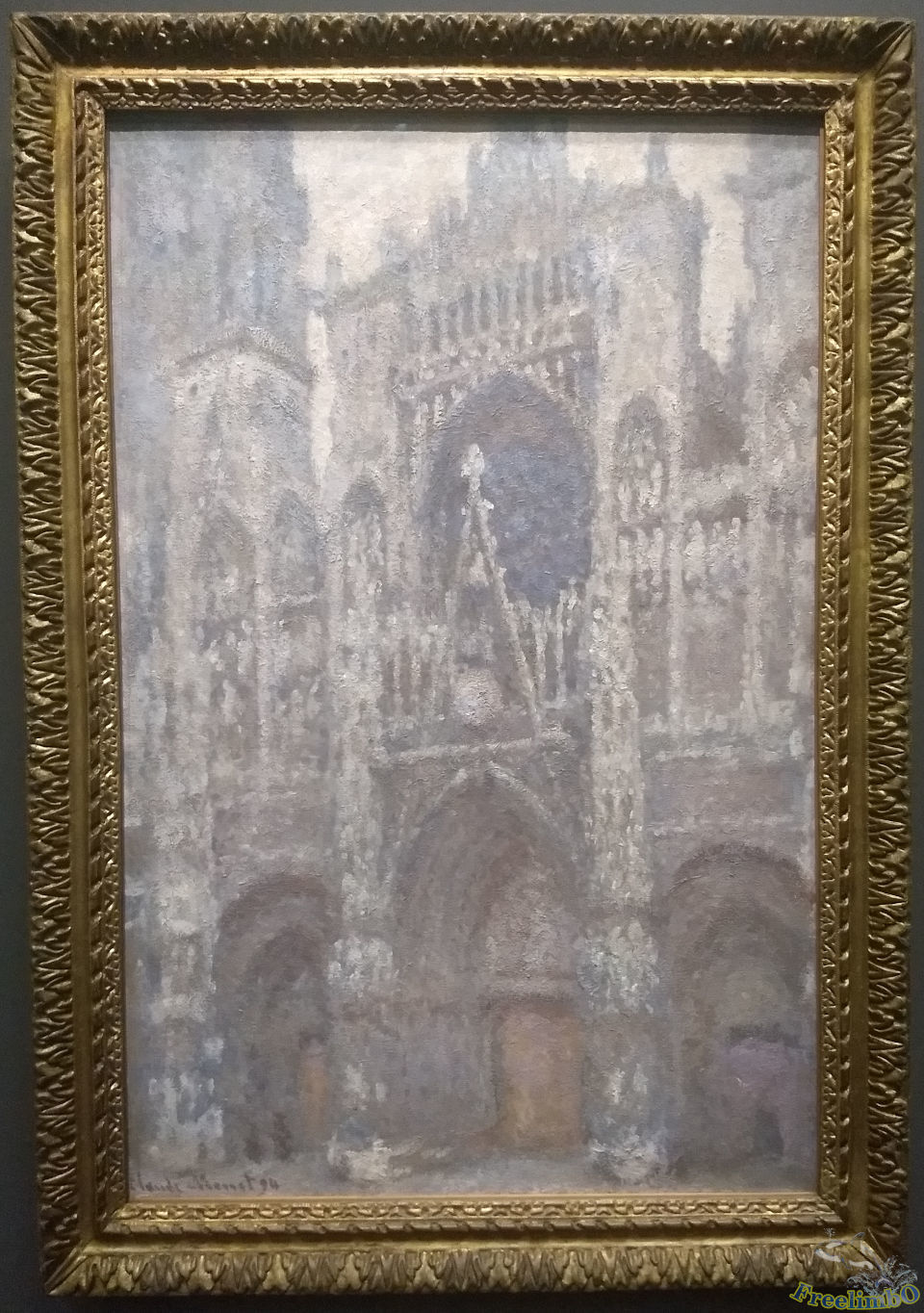
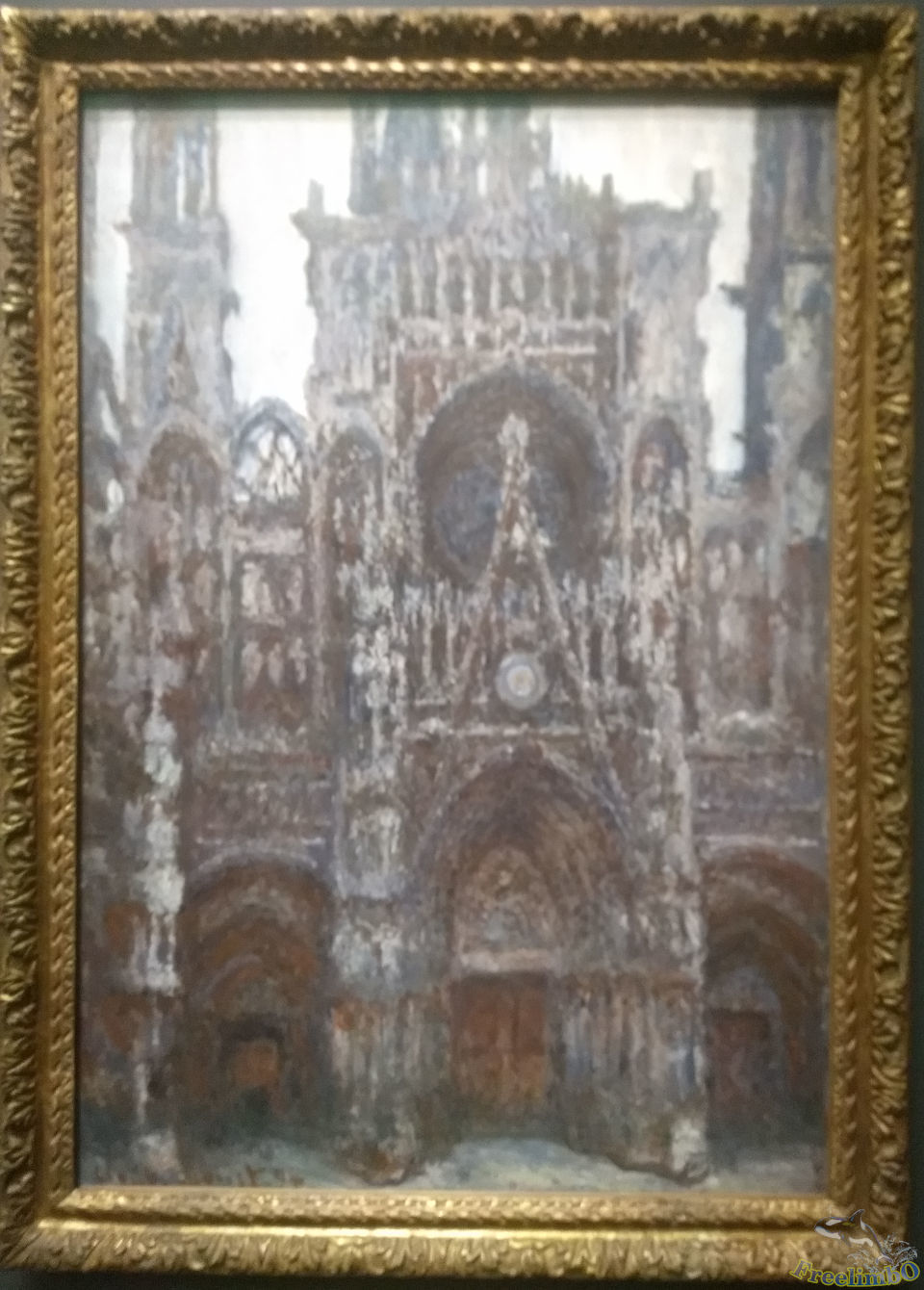
The Rouen Cathedral series 1. 1892
There came the series of Rouen Cathedral. Each of them was beautifully blurred through an impressionist’s eyes, but I personally thought they must be put together so that people can see and appreciate how different weathers change the coloring of the same cathedral.
 |
 |
|---|---|
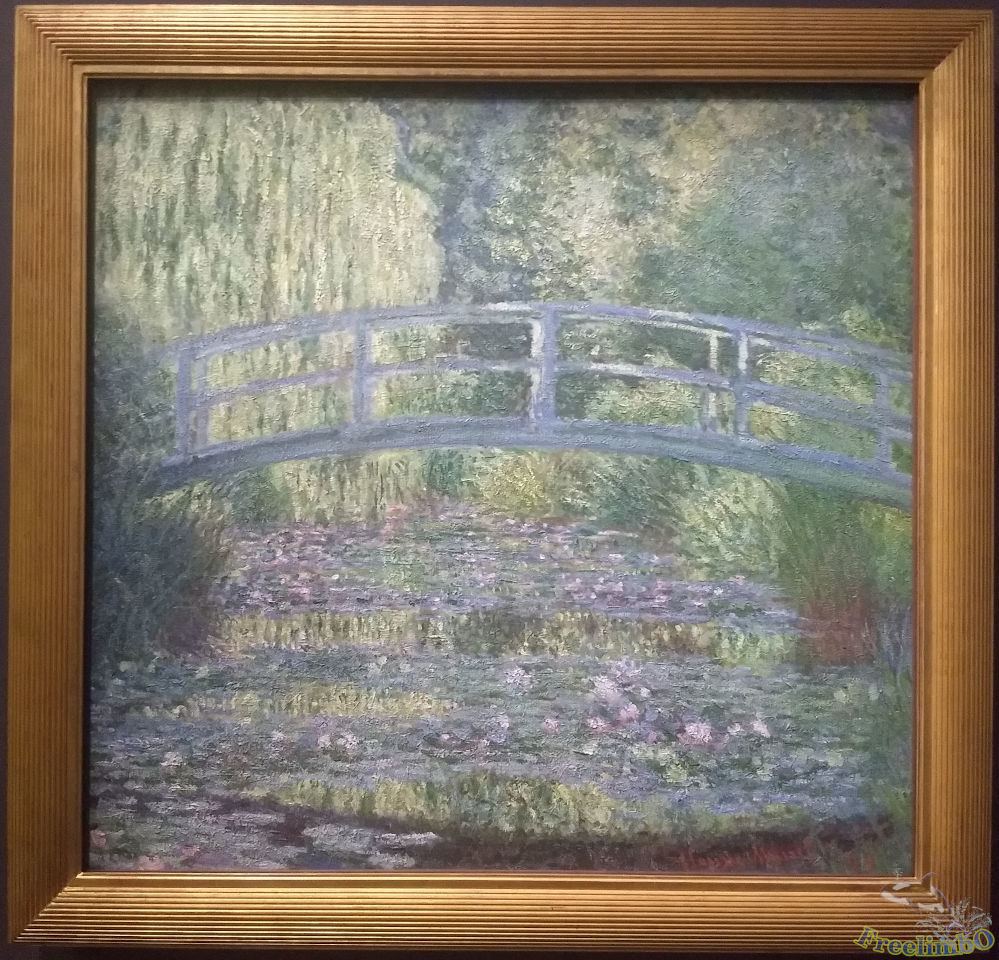
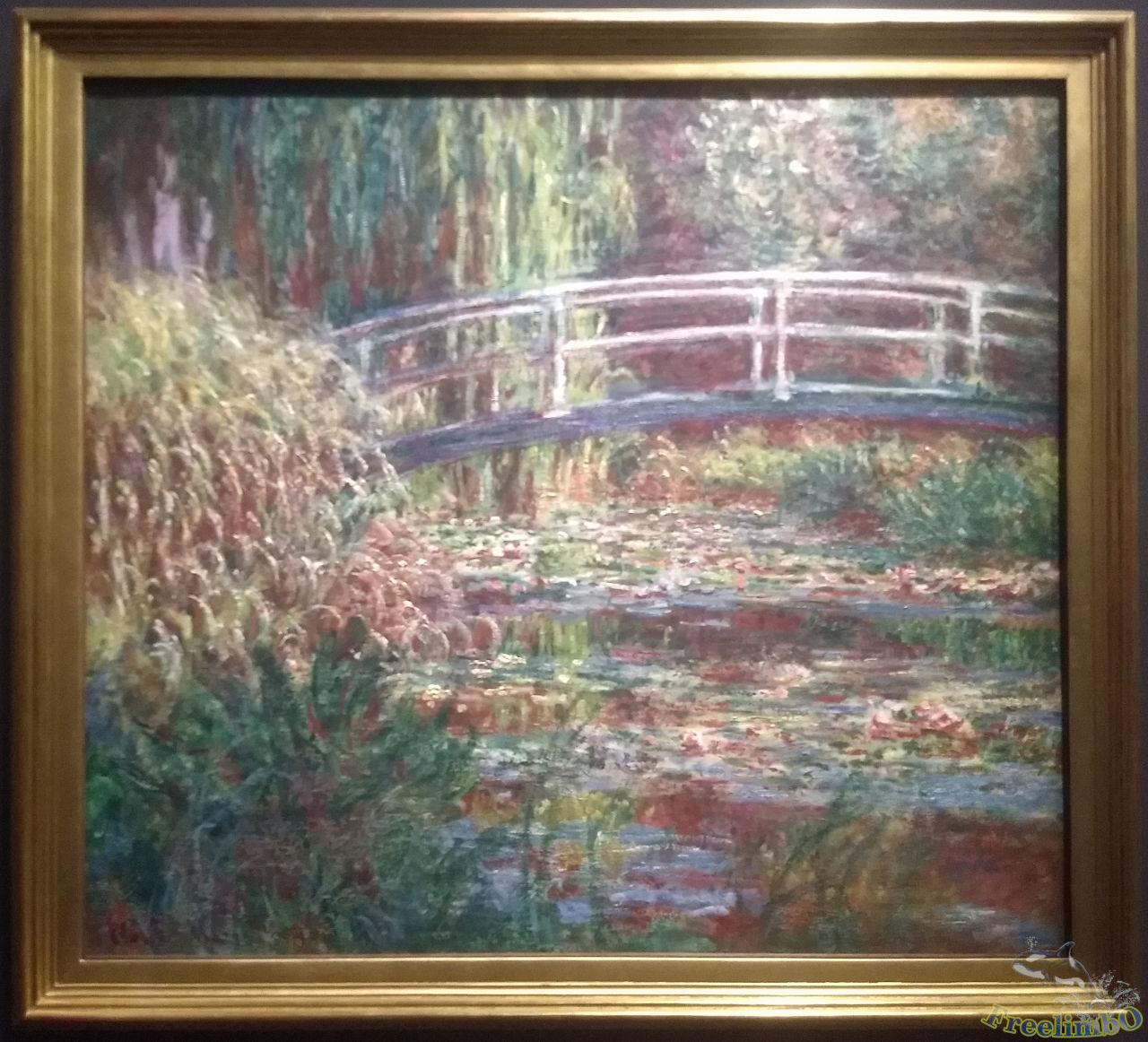
| Water Lily Pond Green Harmony. 1899 | Water Lily Pond Pink Harmony. 1900 |
Actually, Monet drew tons of lily ponds. When I saw the series for the first time, I, honestly, cannot see anything in it. There was too much information for me. To enjoy this series, we must find ourselves a comfortable pose and then stare at it. There were usually some inverted images on the pond although lots of water lilies might float on the pond and made it hard to distinguish where the water was and where the background was. But once you figure out the structure of the scene, everything suddenly becomes logical, cozy, and harmonic. That’s the magic I fond of while enjoying Monet’s water lily pond.
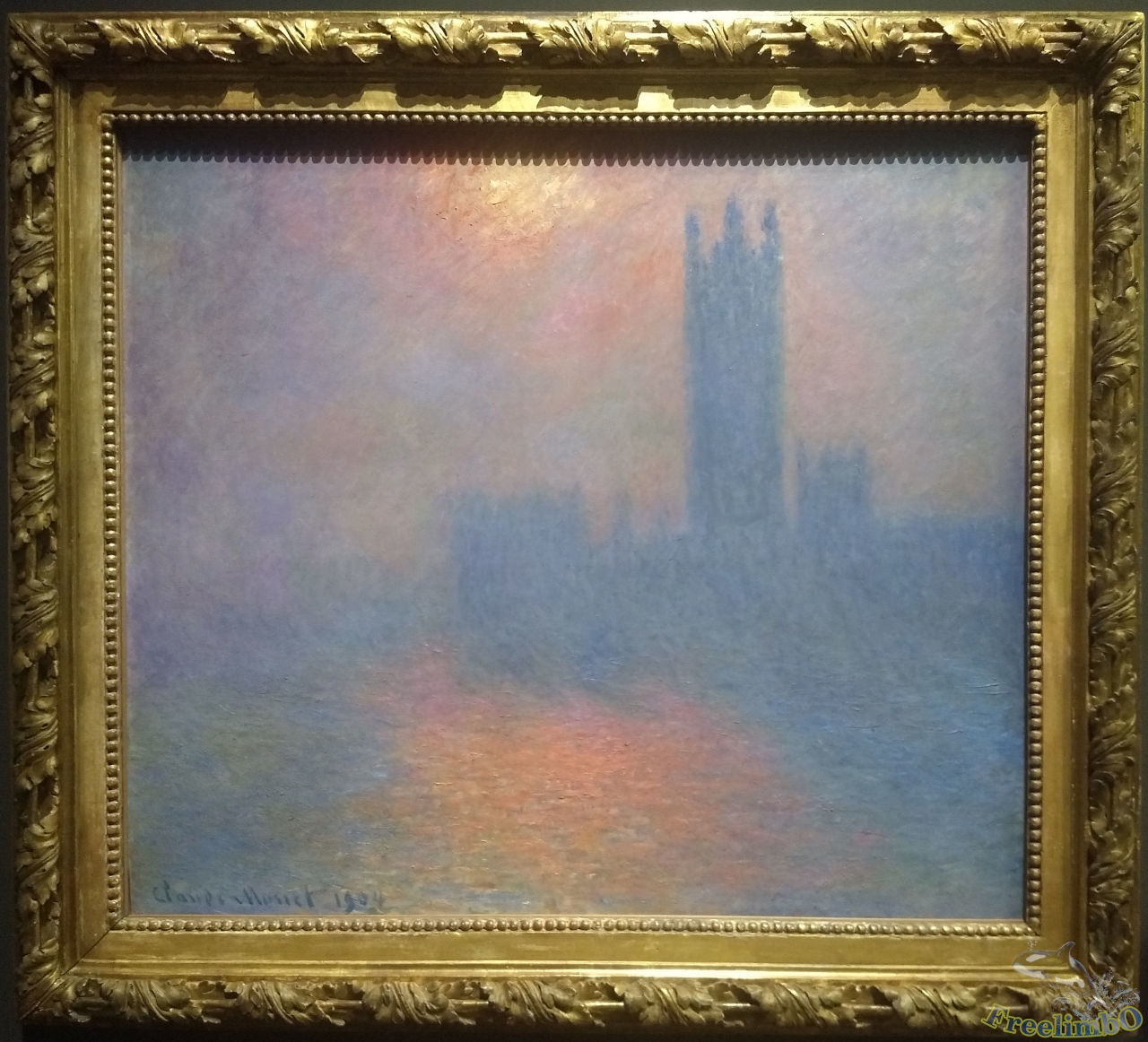
Sun Breaking through the Fog Houses of Parliament. 1904
The sharpest part of this picture must be the frame, lmao. Monet said that he was drawing the parliament houses in London. I haven’t been there and could tell whether the barely visible tower and building outline was the parliament houses. I heard the fog in London can be super thick that makes everything like this shadow. Maybe I can comment on this painting after someday I visit London and realize how thick its fog can be.